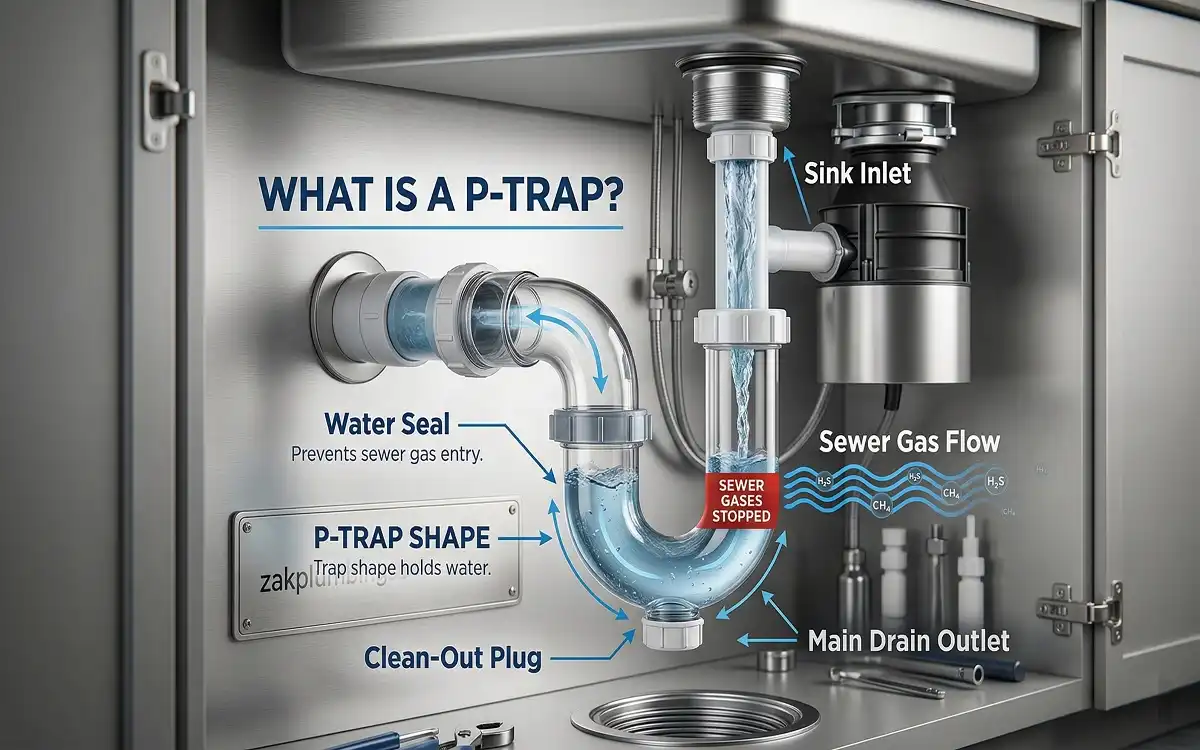
What is a P Trap? Have you ever looked under your kitchen sink and wondered why the pipe has a sudden, dramatic dip in it? It looks like a mistake, but that little curve is actually the only thing standing between you and a house full of sewer smells. This is called a P Trap, and in 2026, it is more advanced than ever before.
Whether you are a DIY enthusiast or just a homeowner trying to figure out why your bathroom smells like a swamp, these 7 secrets will change how you look at your plumbing.
Read: Draino Unleashes 5 Shocking Clog-Busting Secrets
1. The Geometry of the “P” Shape
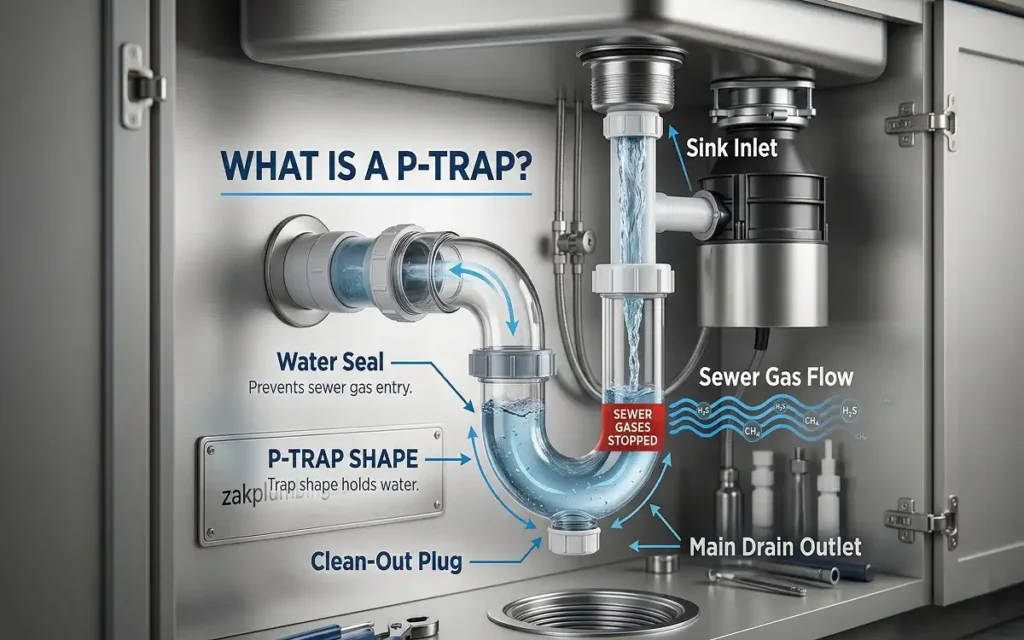
The name comes from the shape. When you look at the assembly from the side, the vertical tailpiece combined with the curved dip and the horizontal arm forms a capital letter “P.” This design is not just for looks, the horizontal arm connects directly to the wall, which is why it is the standard for modern homes.
2. The Invisible Water Barrier
The biggest secret of the P Trap is that it is always full of water. Every time you run the faucet, the “old” water in the curve is pushed out and replaced with “new” water. This standing water creates an airtight seal. Without it, methane and other dangerous sewer gases would float right up through your drain and into your living room.
3. It is a “Lost and Found” for Your Jewelry
We have all been there, you are washing your hands and suddenly your favorite ring slips off. Because of the deep curve, heavy objects like gold, silver, or even small toy cars get stuck in the bottom of the trap instead of being swept away into the city sewer lines. Most of the time, you can just unscrew the trap and get your treasures back!
Read: How To Unclog A Garbage Disposal in 5 Simple Steps Before Calling A Plumber
4. The 2026 “Smart Trap” Revolution
As of the latest 2026 plumbing updates, we are seeing the rise of sensor-integrated P Traps. These new models can detect when the water level in the trap is getting low (due to evaporation) and will actually alert your phone or “auto-refill” the trap to prevent smells. This is a game-changer for guest bathrooms that do not get used often.
5. Why the “S-Trap” is Now Illegal
You might see “S” shaped pipes in very old houses, but modern building codes have officially banned them. S-traps have a habit of “siphoning” all the water out, leaving the trap dry and useless. If you have an S-trap, 2026 regulations highly recommend upgrading to a P-trap to stay compliant and safe.
Read: How to Clean Toilet Tank: 7 Powerful Secrets for a Sparkling Result
6. The 24-Inch Rule
There is a secret limit to how far your trap can be from the sink. Modern 2026 International Plumbing Codes state the vertical distance from the fixture to the trap should not exceed 24 inches. If it is deeper than that, the water falls with too much force and can actually suck the trap dry, breaking that vital seal.
7. It’s the Number One Source of “Ghost Smells”
If you smell something “off” in a room you haven’t used in weeks, it is likely a Dry Trap. The water in the curve simply evaporated. The “pro secret” fix? Just run the water for 30 seconds. That refills the trap and locks the smells back in the sewer where they belong.
Read: How Do You Unclog a Toilet Fast: 7 Proven Ways
What is a P Trap – Technical Specifications and Guide
Below are the key details you need to know about P Trap sizes and materials for your next home project.
- Standard Bathroom Sink Size: Usually 1-1/4 inches in diameter, perfect for smaller drains.
- Kitchen and Laundry Sink Size: Usually 1-1/2 inches in diameter to handle more water volume.
- Shower and Floor Drain Size: These require a larger 2-inch trap to prevent backup during heavy use.
- Common Materials: You will find them in PVC (white plastic), ABS (black plastic), or Chrome-plated Brass for fancy pedestal sinks.
- Maintenance Frequency: It is smart to “flush” unused drains once every 2 weeks to prevent evaporation.
- 2026 Code Update: All new traps must be “self-scouring,” meaning they are shaped to rinse themselves out to prevent gunk buildup.
What is a p trap and How to Tell if Your P Trap is Failing
It is not always obvious when a trap is broken. Here are a few “human” signs that it is time to call Zak Plumbing Service:
- The “Gurgle” Sound: If your sink gurgles when you flush the toilet, your trap might be losing its seal because of a venting issue.
- Slow Draining: If the water takes forever to go down, there is likely a hairball living in the bottom of that “P” curve.
- Visible Corrosion: On metal traps, look for “white dust” or green spots, these are tiny leaks waiting to happen.
- The Mystery Odor: If the bathroom smells like “rotten eggs” even after you clean it, your water seal is definitely compromised.
Read: How Do You Clean a Toilet Tank: 5 Essential Hacks for a Brilliant Result
Summary
Understanding what is a P Trap is the first step to becoming the master of your own home. It is a simple piece of plastic or metal, but it does the heavy lifting of keeping your air clean and your rings safe.
Read: How to Unclog Toilet Without Plunger: The Ultimate 2026 DIY Guide
If you ever run into a clog you can’t shake or a smell that won’t go away, remember that the team at Zak Plumbing Service is only a call away. Don’t let a tiny pipe turn into a big headache, stay on top of your plumbing and keep those seals full!
For More Details Visit Zak Plumbing Service Contact Page