Living in a house without hot Water Heater is like trying to enjoy a party with no music, it just feels wrong. We often forget about that big metal tank in the garage or closet until the shower suddenly turns ice cold on a Tuesday morning.
If you want to avoid that shivering surprise, you need to show your unit some love.
As of May 2026, new smart technologies and high-efficiency heat pump models are hitting the market, but the basics of care remain the same.
Whether you have a classic tank or a fancy new Wi-Fi-enabled system, these simple tips will help you keep the heat on for years to come.
Why Maintenance Matters for Your Water Heater
A lot of homeowners think that a Water Heater is a “set it and forget it” appliance. Sadly, that is not the case. Without a little bit of attention, minerals from your water supply will start to settle at the bottom of the tank. This creates a thick layer of “gunk” that makes your heater work twice as hard to get the water hot. Not only does this hike up your electric or gas bill, but it also causes the metal to overheat and eventually crack.
By following a few easy steps, you can actually double the life of your machine. In 2026, with the cost of living still being a bit of a headache for everyone, saving a few thousand dollars on a premature replacement is a huge win.
Simple Tips to Extend the Life of Your Water Heater
If you want to be your own home hero, start with these straightforward maintenance tasks. You don’t need to be a master plumber to do most of these, but you do need a little bit of patience and maybe a garden hose.
1. Flush the Tank Once a Year
This is the single most important thing you can do. Over time, sediment (mostly calcium and lime) builds up in the bottom.
This sediment acts like a blanket between the burner and the water. To fix this, turn off the power, attach a hose to the drain valve at the bottom, and let the water run out until it looks clear. It sounds messy, but it’s actually quite easy once you do it the first time.
2. Check the Anode Rod
Think of the anode rod as a “sacrificial lamb.” It is a long metal rod that hangs inside your tank and attracts all the corrosive elements in the water so they eat the rod instead of your tank.
In 2026, most pros recommend checking this every 2 to 3 years. If the rod looks like a chewed-up pencil, it’s time to swap it out for a new one.
3. Adjust the Temperature
Many units come set at 140°F (60°C) from the factory. That is way too hot for most people and can lead to accidental burns. Dropping the dial to 120°F (49°C) is the sweet spot. It saves energy, reduces the risk of scalding, and slows down the buildup of mineral scale inside the tank.
Essential Comparison of Water Heater Types
Choosing the right unit is half the battle. Here is a breakdown of what you can expect from the different technologies available in 2026:
- Standard Storage Tank (Electric/Gas):
- Average Lifespan: 8 to 12 years.
- Pros: Very affordable to buy and easy for any plumber to fix.
- Cons: Higher monthly energy bills because it keeps water hot 24/7.
- Tankless (On-Demand) Systems:
- Average Lifespan: 15 to 20 years.
- Pros: You never run out of hot water and it saves a ton of space.
- Cons: Much more expensive to install and needs regular descaling.
- Heat Pump / Hybrid Models (The 2026 Trend):
- Average Lifespan: 10 to 15 years.
- Pros: Extremely energy efficient, often paying for itself in 3 years.
- Cons: Needs a lot of “breathing room” (air space) to work correctly.
- Smart Connected Units:
- Average Lifespan: 10 to 12 years (electronics may fail sooner).
- Pros: Sends alerts to your phone if there is a leak or a part fails.
- Cons: Higher upfront cost and requires a steady Wi-Fi signal.
Warning Signs Your Water Heater Needs Help
Sometimes, your Water Heater will try to tell you it’s dying. You just have to listen. If you hear weird popping or banging sounds, that is usually the sound of steam bubbles pushing through that layer of sediment we talked about earlier.
Another big red flag is rusty-colored water. If your hot water looks like tea but the cold water is clear, your tank is likely rusting from the inside out.
In this case, you should call “zakplumbingservice.com” right away before you end up with a flooded basement.
Common Red Flags to Watch For:
- Leaking Base: If there is even a tiny puddle at the bottom of the unit, it’s a sign the inner tank has a hairline crack.
- Lukewarm Water: If your showers aren’t as hot as they used to be, your heating element or burner might be on its last legs.
- Frequent Tripping: If your electric heater keeps tripping the circuit breaker, you have an electrical short that needs professional help.
The 2026 Update: Smart Sensors and Leak Detection
The biggest change in the plumbing world recently is the rise of affordable smart sensors. In 2026, many new Water Heater models come with built-in leak detectors that can automatically shut off the water main if a drip is found.
Even if you have an older model, you can buy a small “puck” sensor for about $30. You place it on the floor next to the heater, and if it gets wet, it screams or sends a notification to your phone.
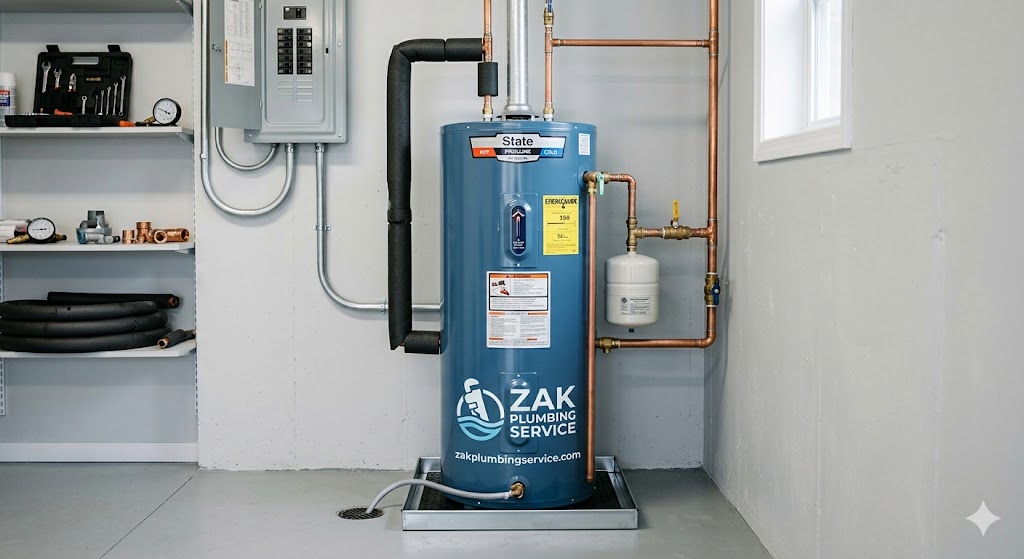
This simple tech can save you tens of thousands of dollars in water damage repairs.
Why You Should Hire a Professional for Your Water Heater
While flushing a tank is a great DIY project, some things are better left to the experts. Dealing with high-voltage electricity or natural gas lines can be dangerous if you don’t know exactly what you’re doing.
A professional plumber from “zakplumbingservice.com” doesn’t just look at the tank, they check the venting system to make sure carbon monoxide isn’t leaking into your home.
They also check the “T&P” (Temperature and Pressure) valve. This is a safety device that prevents the tank from exploding if the pressure gets too high.
If that valve is stuck, your heater is essentially a ticking time bomb. Getting an annual “health check” for your plumbing system is the best way to sleep soundly at night.
Final Thoughts on Maintaining Your Water Heater
Taking care of your home isn’t always glamorous, but it is rewarding. A well-maintained Water Heater will provide you with hot showers, clean clothes, and sanitized dishes for a decade or more. Just remember the “Golden Three”: flush it, check the rod, and keep the temp at 120.
If you ever feel overwhelmed or notice a leak that looks scary, don’t wait. A small repair today is much cheaper than a whole new tank tomorrow.
Keep an eye on those 2026 smart features, stay safe, and enjoy that hot water, you’ve earned it!
For More Details Visit Zak Plumbing Service Contact Page