We have all been there. You are standing in the shower, enjoying the warm water, when you suddenly realize you are ankle-deep in a mini-lake. Or maybe you are doing the dishes, and the sink just refuses to swallow the water. It is frustrating, messy, and honestly, a bit gross. Most people immediately reach for that familiar orange bottle under the sink.
But did you know that Draino has changed a lot recently? In 2026, the way we fight clogs has evolved, and there are some “secrets” to using these products that most homeowners simply do not know.
Actually, using a drain cleaner is not just about pouring and praying. It is about chemistry, timing, and knowing your pipes. If you use it wrong, you might just be wasting money, or worse, making the problem harder for a plumber to fix later.
Today, we are pulling back the curtain on how to get the most out of your clog-clearing efforts without ruining your day.
Read: How to Unclog Toilet Without Plunger: The Ultimate 2026 DIY Guide
The Science Behind How Draino Actually Works in 2026
To really understand the power of Draino, you have to look at what is happening inside that dark, wet pipe. It is not just “acid” eating through things. In fact, most modern formulas use a combination of sodium hydroxide (lye), sodium hypochlorite (bleach), and tiny bits of aluminum.
When these hit the water in your drain, they start a thermal reaction. They create heat. This heat helps to soften grease and fat, making them easier to wash away.
In 2026, the formulas have become even more “intelligent.” They are designed to be heavier than water, which is a huge deal. Old-school cleaners would often just sit on top of the puddle, never actually reaching the hairball at the bottom.
The latest versions of Draino are engineered to “cut” through standing water. They sink like a stone until they hit the blockage, ensuring the chemicals start working exactly where they are needed most.
Step 3: Key Product Comparison (Point Form)
Instead of a table, here is the breakdown of the current 2026 lineup:
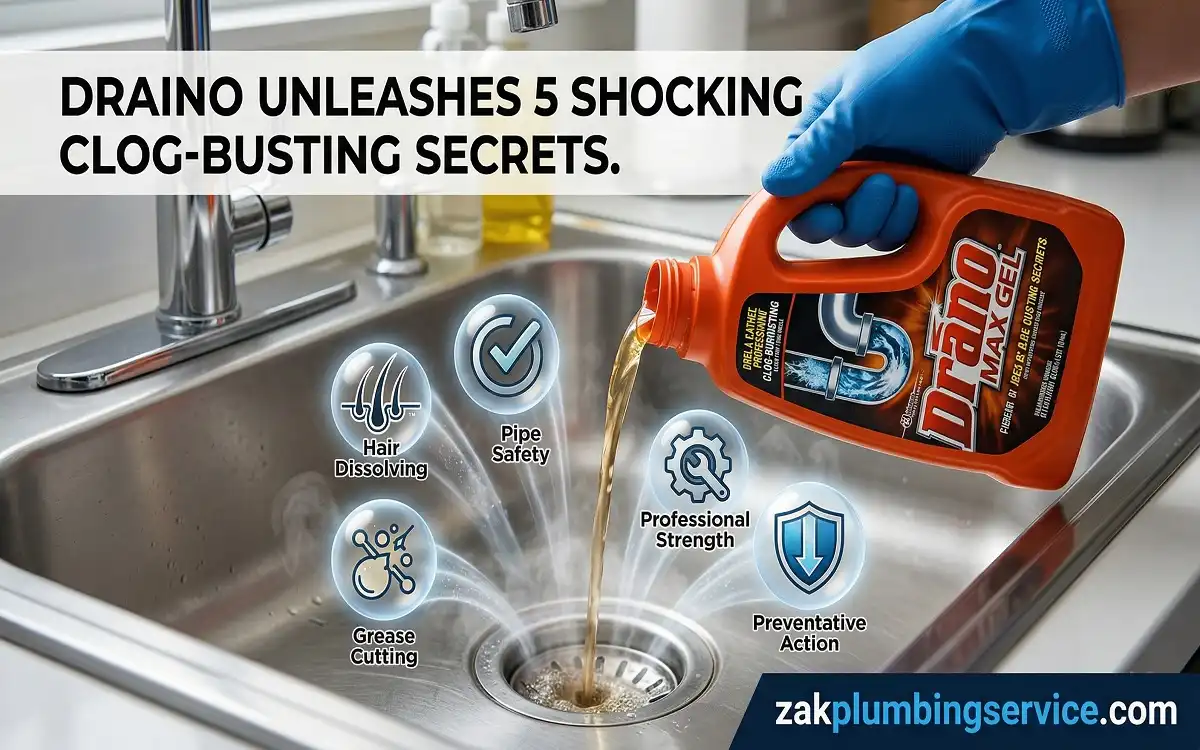
- Drano Max Gel: The heavy hitter for standing water, designed to sink straight to the clog without diluting. Best for thick hair and soap scum.
- Drano Dual-Force Foamer: Best for full-pipe coverage. It expands to clean the walls of the pipe, not just the bottom, which is great for removing odors and “gunk” buildup.
- Drano Kitchen Max: Specially formulated to cut through grease and food particles. It is the go-to for kitchen sinks where oils are the main enemy.
- Drano Balance: The 2026 eco-friendly choice. It uses essential ingredients that are tougher on clogs but gentler on the environment.
- Drano Hair Buster Gel: A specialized formula with higher concentrations of hair-dissolving agents, perfect for bathroom tubs and showers.
Secret 1: The Dual-Force Action of Modern Draino
One of the biggest secrets to success is choosing the right “form” of the product. People often think all liquids are the same, but that is a big mistake. The “Dual-Force” technology found in recent Draino releases uses two separate liquids that mix as they pour. This creates a powerful foaming action.
Why does foam matter? Well, think about your pipes. A liquid just runs along the bottom. But a clog is often stuck to the “ceiling” or the sides of the pipe too. The foam expands to fill the entire diameter of the pipe. This ensures that every single inch of gunk is touched by the cleaner.
Read: How to Clean Toilet Tank: 7 Powerful Secrets for a Sparkling Result
Why Foam Beats Liquid for Stubborn Draino Tasks
If you have a slow-running drain that smells bad, the foam is your best friend. Those smells are usually caused by bacteria growing in a layer of “biofilm” on the pipe walls. Standard Draino might clear a path through the middle, but the foam strips the walls clean. It is like the difference between rinsing a plate and scrubbing it with a sponge. For 2026, the foam versions have been refined to stay active longer, giving them more time to “eat” the organic matter.
Secret 2: Temperature Control and the Draino Reaction
Here is a secret that even some “handy” neighbors get wrong: the water temperature matters. Many people think they should use boiling water right after pouring Draino down the sink. Please, do not do that! While the chemicals need heat to work, adding boiling water can cause a reaction that is a bit too “energetic,” potentially splashing back or even damaging older PVC pipes.
The trick is to use “hot, but not boiling” water. In 2026, the chemical stabilizers in Draino are tuned to work best at around 140°F. If you use cold water, the grease might just re-solidify before it leaves your house. If you use boiling water, you risk a “geyser” effect. Just let the tap run hot for a minute before you flush the drain. It makes a world of difference in how much gunk actually leaves your plumbing system.
Secret 3: Identifying Clogs That Only Draino Can Melt
Not all clogs are created equal. If your kid dropped a plastic toy down the toilet, no amount of Draino will ever fix that. In fact, you should never use these chemicals in a toilet because the heat can crack the porcelain. However, for organic clogs, this stuff is magic.
The secret is knowing what is “organic.” Hair, soap scum, grease, and food particles are the “big four.” Modern Draino is specifically built to break the chemical bonds in these materials. If you have a bathroom sink that is clogged with a mix of beard hair and toothpaste, the specialized “Hair Buster” formulas are your best bet. They contain extra enzymes that “digest” the keratin in hair, which is usually the toughest part of a bathroom clog.
Read: How To Unclog A Garbage Disposal in 5 Simple Steps Before Calling A Plumber
Secret 4: The 2026 Safe-Pipe Guarantee for Draino Users
A common myth is that drain cleaners will melt your pipes. While that might have been true for some “industrial” acids forty years ago, the Draino you buy today is safe for almost all modern plumbing. Whether you have PVC, orangeburg, or copper pipes, the formula is designed to be “non-corrosive” to the pipe material itself while remaining “aggressive” toward the clog.
In the 2026 product updates, manufacturers have added “corrosion inhibitors.” These are tiny molecules that form a temporary protective layer on the metal or plastic of your pipes as the cleaner passes through.
This means you can use the product with confidence, provided you follow the instructions and do not let it sit for days at a time. It is all about balance, and the modern science has finally mastered it.
Read: How Do You Unclog a Toilet Fast: 7 Proven Ways
Secret 5: When to Skip the Bottle and Call Zak Plumbing Service
The final secret is knowing when you are out of your league. Draino is a fantastic tool for maintenance and minor clogs, but it is not a “magic wand” for a collapsed sewer line or a massive tree root intrusion.
If you have used a bottle and the water still is not moving, do not pour a second bottle. At that point, you are just filling your pipes with standing chemicals, which makes it dangerous for a plumber to work on later.
If you see water backing up in the tub when you flush the toilet, or if multiple drains are slow at once, the problem is deeper in your system.
That is when you need to put down the bottle and call the pros at Zak Plumbing Service. We have the cameras and the high-pressure jets to clear things that no chemical can touch. Sometimes, the “secret” to a clear drain is simply knowing when to call in the experts.
Read: How Do You Clean a Toilet Tank: 5 Essential Hacks for a Brilliant Result
Finally
Keeping your home’s plumbing running smoothly does not have to be a mystery. By understanding how Draino works, using the right “Dual-Force” foam for the job, and respecting the chemistry of the pipes, you can handle most minor issues on your own.
Just remember to be safe, use hot (not boiling) water, and know that Zak Plumbing Service is always here if the clog proves to be a bit too stubborn for the orange bottle!
For More Details Visit Zak Plumbing Service Contact Page