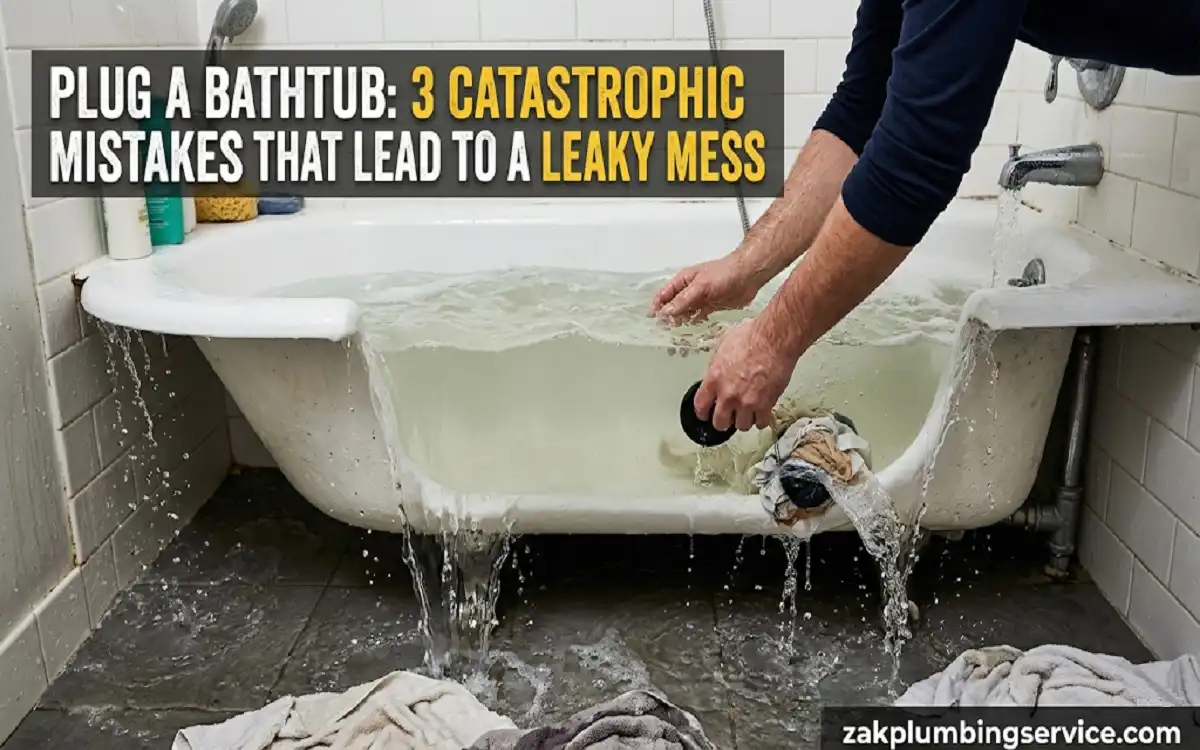
There is nothing quite like a long soak to wash away a stressful day. But in 2026, with our busy schedules and the new “wellness-first” home trends, a leaking bathtub is more than just a nuisance, it is a waste of water and money. Many people think that to plug a bathtub correctly, you just shove a stopper in and call it a day.
Unfortunately, small errors can turn a relaxing evening into a soggy nightmare. Whether you are using a classic rubber plug or one of those fancy new smart-sensor drains, avoid these three big mistakes to keep your water where it belongs.
Read: Hydrojet Plumbing: 3 Shocking Reasons to Avoid Costly Pipe Replacements
1. Using the Wrong Size for Your Drain
The most common reason people fail to plug a bathtub effectively is simply using the wrong equipment. In 2026, bathtub designs have become more sculptural and varied. A “one size fits all” plug from a decade ago likely won’t fit a modern, deep-soak basin.
If the plug is too small, water will seep through the gaps. If it is too large, it won’t sit flush, creating a weak seal that pops open as soon as you sit down. Always measure your drain diameter before buying a replacement.
Read: Hydro Jetting Sewer Line: 5 Crucial Reasons to Avoid Dangerous Pipe Damage
2. Neglecting the Gasket and Seal
Many modern tubs use a “toe-touch” or “lift-and-turn” mechanism. These have a rubber ring called a gasket. Over time, hair, soap scum, and hard water minerals build up on this ring. When you try to plug a bathtub with a dirty or cracked gasket, the seal is never airtight.
Even a tiny piece of hair caught in the seal can cause the water level to drop by an inch every ten minutes. It is a good idea to wipe the underside of your stopper every week to keep it grippy and clean.
3. Forgetting the “Overflow” Factor
Did you know your tub has a “secret” drain? That metal plate higher up on the wall of the tub is the overflow drain. If the internal plumbing of that overflow is loose or the gasket behind it has rotted, water can leak behind the tub while you are trying to fill it.
People often think they have a problem with how they plug a bathtub at the bottom, but the water is actually escaping through a faulty overflow gasket. If your floor is getting wet but the drain looks fine, this is your culprit.
Read: Septic Tank Pumping Services: 7 Essential Benefits for a Worry-Free Home
Smart Ways to Plug a Bathtub Without a Stopper
Sometimes your plug just goes missing. If you are in a pinch, here are the best 2026 DIY hacks to save your bath time:
- The Plastic Bag Method: Take a small freezer bag, fill it with a little bit of water, and seal it tight. Place it over the drain. The weight of the water inside the bag will mold it perfectly to the shape of the hole, creating a temporary seal.
- The Coffee Pod Hack: If you use a single-serve coffee machine, an empty, clean plastic pod is often the perfect size to fit into a standard drain. Just press it in firmly.
- The Jar Lid Trick: A flat lid from a jam jar or a peanut butter jar can work wonders. If it is a bit loose, wrap a rubber band around the edges to give it some “grip” against the porcelain.
- The Silicone Baking Mat: If you have a flat silicone mat from your kitchen, you can lay it over the drain. The suction created by the water pressure will hold it flat and stop any leaks.
Comparison of Popular Bathtub Plugs in 2026
To help you choose the best permanent fix, here is how the most common types of stoppers compare in terms of durability and ease of use:
- Toe-Touch Stopper: These are very popular because you just tap them with your foot. They are easy to install but the internal spring can wear out after a few years.
- Lift-and-Turn: This is the “old reliable” of plumbing. You twist it to lock it. It rarely breaks, but it can be hard to operate if your hands are covered in soapy water.
- Pop-Up Plunger: These are connected to a lever on your overflow plate. They look very clean and modern, but they are the hardest to fix if the internal linkage gets stuck with hair.
- Traditional Rubber Plug: The cheapest option. It is 100% effective and never breaks, though it doesn’t look as “premium” as the built-in metal versions.
Read: Sewer Line Cleaning: 7 Expert Secrets for a Perfect Home Drainage System
Final Thoughts for a Perfect Soak
Learning how to properly plug a bathtub is a basic home skill that saves you from high water bills and potential floor damage. If you have tried these tips and your tub is still losing water, it might be time for a professional look at your pipes.
At Zak Plumbing Service, we see these “leaky messes” every day. Most of the time, it is a simple fix that takes us minutes but saves you hours of frustration. Don’t let a bad seal ruin your peace and quiet!
For More Details Visit Zak Plumbing Service Contact Page