There is almost nothing that induces a state of panic quite like seeing the water rise in a toilet bowl after you flush. You stare at it, praying it stops before it hits the rim, while your brain frantically searches for a plunger that, of course, isn’t there. Maybe you are at a friend’s house, or maybe you just moved and haven’t unpacked the essentials yet. Whatever the reason, if you need to know how to unclog a toilet when the water is high, you have come to the right place.
In this 2026 update, we are looking at the most effective, “human-tested” ways to handle a plumbing emergency using just basic household items. You don’t need fancy tools, you just need a little patience and some kitchen supplies.
Read: how to unclog a toilet without a plunger with poop
Step 1: The Panic Button (Stop the Overflow)
Before you try any “hacks,” you have to make sure the water doesn’t actually spill onto the floor.
If the water is still rising, take the lid off the tank immediately.
Reach in and push the flapper (that rubber circle at the bottom) down.
This stops more water from entering the bowl.
Once the “flood” is contained, you are ready to tackle the blockage.
Here is how to unclog a toilet when the water is high using things you already own.
Methods to Unclog a Toilet when the Water is High
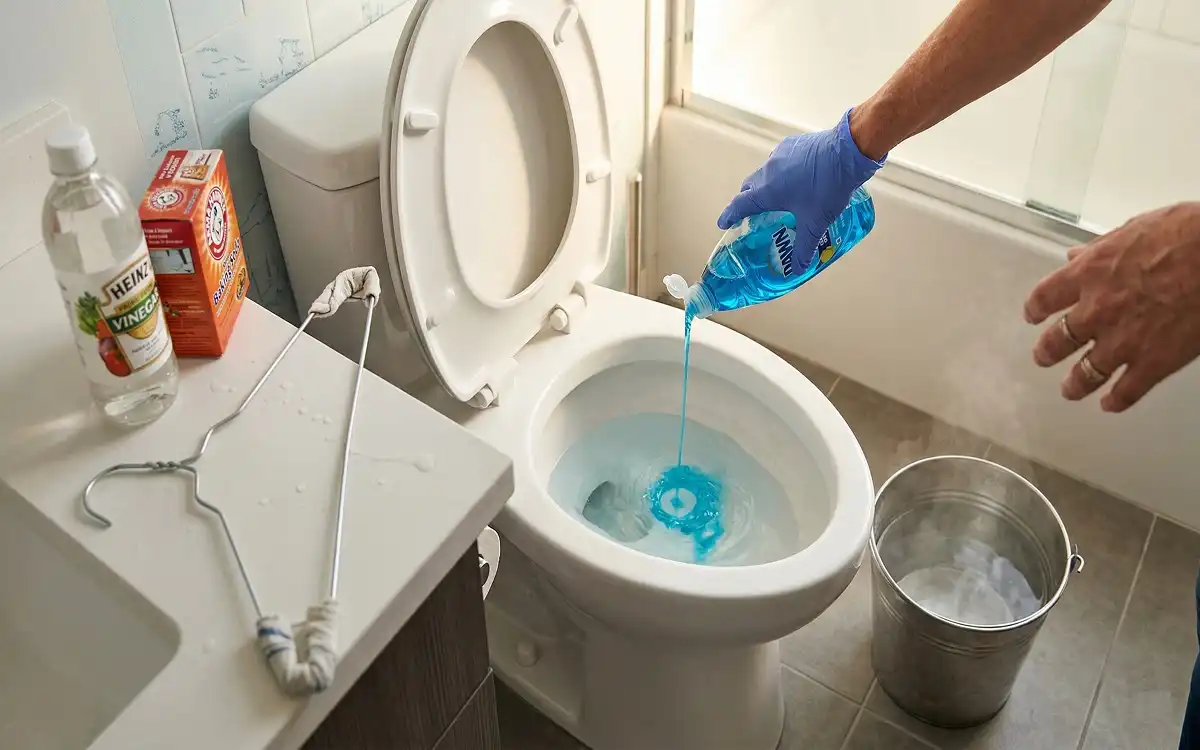
1. The Dish Soap and Hot Water Lubricant
This is the “gold standard” of plunger-free fixes. Dish soap is a lubricant. When you pour it into the bowl, it sinks to the bottom and wraps around the clog, making it slippery enough to slide through the pipes.
- Step A: Squirt a generous amount of dish soap (about half a cup) into the bowl.
- Step B: Let it sit for 20 minutes. You need to give the soap time to work its way into the “debris.”
- Step C: Add hot water. Do not use boiling water. Boiling water can actually crack the porcelain of your toilet, which is a much more expensive problem than a clog. Use very hot tap water and pour it from waist height to add a bit of pressure.
Read: How Do You Get a Toilet Unclogged: 3 Risky Blunders That Cause Terrible Damage
2. The Baking Soda and Vinegar Volcano
If the soap didn’t do the trick, it is time for a little chemistry. This method is great because the fizzing action can physically break apart organic matter.
- The Mix: Pour one cup of baking soda into the bowl. Wait for it to sink.
- The Reaction: Slowly pour two cups of white vinegar. It will start to bubble up. If the water level is extremely high, do this very slowly so it doesn’t fizz over the rim.
- The Wait: Let this mixture sit for at least 30 minutes. The chemical reaction works to loosen the bond of the clog.
3. The Plastic Bottle Pressure Hack
This is a clever 2026 DIY favorite. If you have an empty 2-liter soda bottle, you can create a makeshift pressure device.
- Prep: Fill the bottle with warm water.
- Execution: Put your thumb over the opening, invert it, and place it directly into the hole at the bottom of the toilet.
- The Squeeze: Squeeze the bottle hard. This sends a concentrated “jet” of water into the trap, which often provides enough force to push the clog through.
Read: Hydrojet Plumbing: 3 Shocking Reasons to Avoid Costly Pipe Replacements
4. The Wire Hanger “Snake”
If you suspect the clog is made of something solid (like too many paper towels), you might need to reach in. Take a wire coat hanger and straighten it out.
Wrap a small rag around the end and secure it with tape so you don’t scratch the porcelain. Gently push it into the drain and wiggle it. Your goal is to break the mass into smaller pieces that can pass through the pipes.
Important Safety and Maintenance Tips – Unclog a Toilet when the Water is High
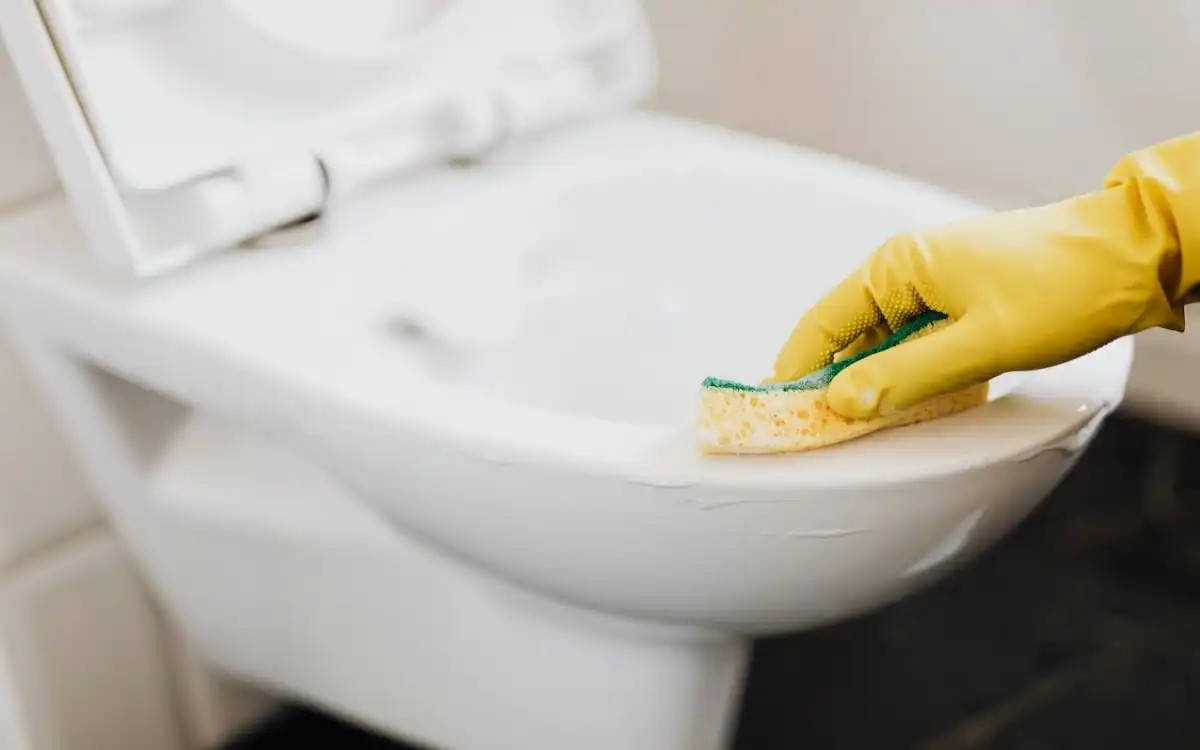
When you are trying to unclog a toilet when the water is high, you should always wear gloves. Bathroom water isn’t exactly clean, and splashes happen.
Also, if you notice the water isn’t going down at all after 30 minutes of trying these steps, the clog might be deeper in the main line.
In the 2026 plumbing landscape, we are seeing more “eco-friendly” pipes in newer homes. These materials are great for the planet but can be sensitive to harsh chemicals.
Avoid using store-bought liquid drain cleaners, as they can sit in the trap and eat away at your seals or pipes if the clog doesn’t clear. Stick to the soap or vinegar methods first.
Read: Hydrojet Drain Cleaning: 5 Proven Benefits for a Perfect Home
Summary of DIY Methods (Quick Reference)
- Dish Soap Method: Best for “organic” clogs. Requires 20 minutes of waiting. Uses soap and hot (not boiling) water.
- Baking Soda & Vinegar: Best for stubborn paper clogs. Creates a fizzing reaction. Requires 30 minutes.
- Wire Hanger Method: Best for physical obstructions near the entrance of the drain. Be careful not to scratch the bowl.
- Plastic Bottle Method: Creates manual water pressure. Good for “pushing” the clog through the S-bend.
- Toilet Brush Method: Use the brush like a plunger by pushing it rapidly in and out of the hole to create suction.
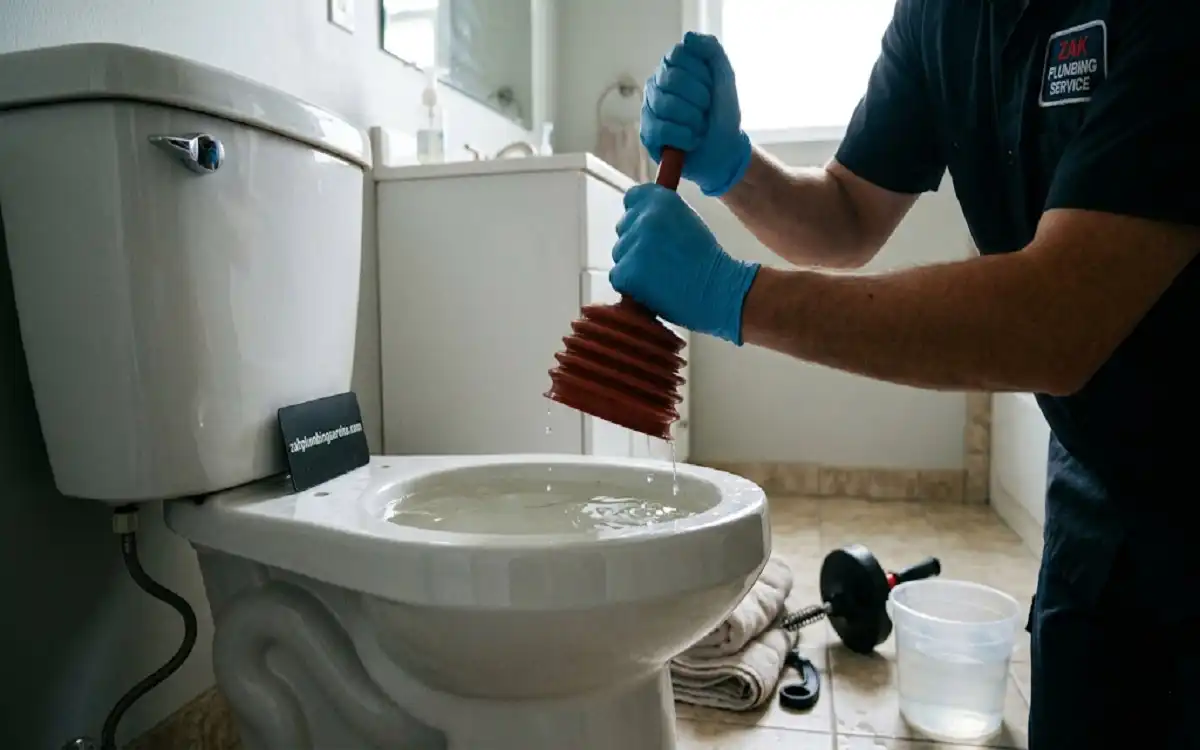
When to Call Zak Plumbing Service
Sometimes, a DIY fix just won’t cut it. If you have tried the soap, the vinegar, and the hanger, and the water level still hasn’t budged, you might have a problem further down the line, like a tree root intrusion or a collapsed pipe.
Read: Clogged Drain Service Near Me: 7 Life-Saving Tips to Avoid a Costly Mess
At Zak Plumbing Service, we stay updated on the latest 2026 plumbing technology, including high-def sewer cameras and hydro-jetting tools that clear lines without damaging your home.
If your “porcelain throne” is still acting like a fountain, give us a call before the floor gets soaked. We’ve seen it all, and we’re here to help you get things flowing again.
For More Details Visit Zak Plumbing Service Contact Page