Have you ever walked past a heavy metal grate on your property during a storm and noticed a small lake forming around it, If so, you’re looking at a catch basin that is crying out for help. Most property owners don’t think about their drainage until the basement is damp or the parking lot is a swamp.
But here’s the thing, catch basins are the unsung heroes of your infrastructure. They are designed to “catch” debris like sand and trash before it enters the main sewer lines.
When they work, you don’t notice them. When they fail, you’re looking at thousands of dollars in property damage and emergency repairs.
What Exactly is a Catch Basin and Why Does It Fail?
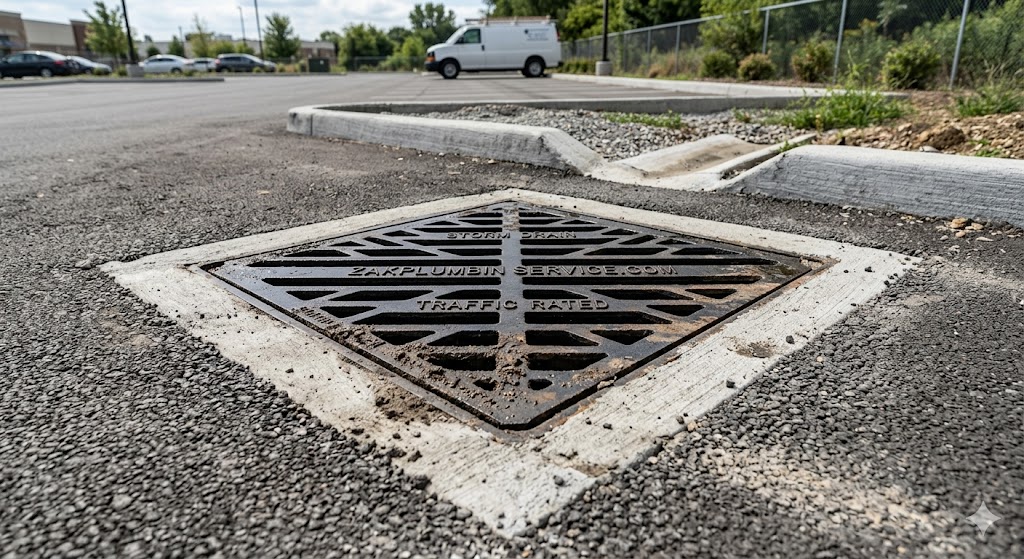
A catch basin is more than just a hole in the ground with a lid. It features a “sump” area, which is a deep pocket below the outlet pipe.
This design allows heavy solids to sink to the bottom while the clean water flows out through the pipe.
However, these systems are not “set it and forget it.” In 2026, we are seeing more intense weather patterns than ever before, which means more sediment is being washed into these basins at a faster rate.
Most failures happen for one simple reason: the sump gets full. Once the sediment reaches the level of the outlet pipe, the debris has nowhere to go but into your main drainage lines.
This leads to massive clogs that are much harder and more expensive to fix. Furthermore, the structural integrity of the basin can degrade.
Freeze-thaw cycles cause the concrete to crack, allowing water to seep into the surrounding soil, which eventually leads to those terrifying sinkholes near the grate.
7 Proven Ways for Effective Catch Basin Maintenance
1. Schedule Semi-Annual Cleanings (The 2026 Standard)
In the past, people thought once a year was enough. In 2026, the industry standard has shifted to semi-annual cleanings. You want to clear out the winter sand and salt in the early spring, and then remove the fallen leaves and organic matter in late autumn.
This “two-hit” strategy ensures the basin is never at more than 50% capacity, which is the “danger zone” for overflow.
2. Implement Smart Sensor Technology
One of the coolest updates this year is the rise of IoT (Internet of Things) sensors for residential and commercial drainage.
These small, battery-powered devices sit inside the basin and monitor the water and sediment levels. Instead of guessing when it’s full, the sensor sends a notification to your phone. It’s a game-changer for avoiding disasters during unexpected heavy rainfall.
3. Regular Grate and Frame Inspections
The metal grate on top takes a lot of abuse, especially from heavy vehicles. Over time, the frame can settle or shift. If the grate isn’t sitting flush, it creates a trip hazard and allows larger debris to fall in that shouldn’t be there. Check for “spalling,” which is when the concrete around the rim starts to flake away. Catching this early means a simple mortar repair instead of a full reconstruction.
4. Managing Organic Debris and “Floatables”
Not everything sinks. Oils, grease, and plastic trash often float on top of the water. These “floatables” can block the outlet pipe even if the sump isn’t full.
Using a “hooded” outlet or a baffle can help keep these materials trapped in the basin so they can be vacuumed out later, rather than letting them escape into the city’s water system.
5. High-Pressure Jetting for Laterals
Maintaining the basin is only half the battle. The “laterals” are the pipes that lead away from the basin. Even with a clean sump, these pipes can develop a build-up of slime or small roots.
High-pressure water jetting once every two years clears these lines out, ensuring that when the basin catches the water, it actually has somewhere to go.
6. Monitoring for “Sinkhole” Warning Signs
Keep an eye on the pavement immediately surrounding the basin. If you see cracks forming in a circular pattern or the asphalt seems to be “dipping,” you likely have a leak in the basin walls.
Water is escaping and washing away the sub-base soil. If you ignore this, the entire basin could eventually collapse, taking a chunk of your driveway with it.
7. Professional Vacuum Extraction
We often see people trying to shovel out a catch basin by hand. Please, don’t do this. It’s messy, dangerous, and you can only reach the top layer.
Professional vacuum trucks use high-powered suction to pull every bit of sludge and heavy rock from the very bottom of the sump. This “deep clean” is the only way to restore the basin to its full original capacity.
Understanding the 2026 Tech Updates in Drainage
The big news for 2026 is “Predictive Maintenance.” Using Geographic Information Systems (GIS), companies like Zak Plumbing can now track the historical data of your basins.
By looking at weather forecasts and your specific basin’s history, we can predict exactly when it will reach capacity.
This data-driven approach saves you money because you aren’t paying for cleanings you don’t need, but you’re never caught off guard by a flood.
The Cost of Neglect vs. Proactive Care
Let’s talk numbers, because that’s usually where it hits home. A standard professional cleaning might cost a few hundred dollars.
On the flip side, a collapsed catch basin that requires excavation, new concrete rings, and asphalt patching can easily climb into the $5,000 to $10,000 range.
When you consider the potential for water damage to your building’s foundation, the “maintenance” route isn’t just a choice, it’s a financial necessity.
Essential Catch Basin Maintenance Guide
Instead of a complex table, here are the key takeaways you need to remember for your property:
- Cleaning Frequency: At least twice a year (Spring and Fall) is the sweet spot for most properties.
- Critical Threshold: Never let the sediment level reach more than one-third of the basin’s total depth.
- Visual Warning Signs: Look for standing water, foul odors, or “sinkhole” depressions in the nearby pavement.
- New Tech for 2026: Consider installing ultrasonic level sensors to get real-time alerts on your smartphone.
- Safety First: Never attempt to enter a catch basin yourself, as they are considered “confined spaces” and can contain toxic gases or low oxygen levels.
- Environmental Impact: Keeping your basin clean prevents motor oil and heavy metals from reaching local rivers and streams.
- Professional Tools: Always ensure your service provider uses a vacuum truck (Vactor) and not just manual labor for a complete sump clean-out.
Finally
A well-maintained catch basin is the best insurance policy your property can have against water damage.
By embracing the new technologies of 2026 and sticking to a simple semi-annual schedule, you can avoid the “drainage disasters” that plague so many other owners. If you haven’t looked under that grate in a while, now is the time to check. Your foundation (and your wallet) will thank you.