How to Repair Leaky Pipe Picture this, you walk down into your basement or open the cabinet under your kitchen sink, and you hear it. A steady, annoying dripping noise that instantly makes your stomach drop. Water is pooling where it absolutely should not be. Pipe leaks always happen at the worst times, like right before bedtime or over a busy holiday weekend. It is completely normal to panic at first, but honestly, you do not have to stress out. Knowing a few basic tricks can save your floors, keep your drywall dry, and keep your sanity intact until you can get a professional out to fix the line permanently.
Why Knowing How to Repair Leaky Pipe Saves Your Home
Dealing with water damage gets expensive fast, so acting quickly is your best defense. Even a tiny, hidden pinhole leak can waste hundreds of gallons of water over a month, driving up your water bill like crazy. Before we even dive into the actual repairs, you need to turn off the main water valve. Seriously, do not skip this step, or you will end up with a mini swimming pool in your house. Once the water is off and the pressure is drained from the lines, you are ready to tackle the problem head-on with some simple tools.
The 3 Ultimate Tricks on How to Repair Leaky Pipe Quickly
Look, you do not need a massive toolbox or a plumbing license to stop a basic leak in an emergency. Most home centers sell a handful of life-saving products that can hold your plumbing together temporarily. Let us look at the three best DIY methods that homeowners can use to handle unexpected pipe disasters right now.
Trick 1: Self-Fusing Silicone Tape Solutions on How to Repair Leaky Pipe
The first trick is probably the easiest thing you can keep in your emergency home repair kit. We are talking about self-fusing silicone tape, which has become incredibly popular lately. Unlike normal duct tape or electrical tape, this special silicone tape does not have sticky glue on it. Instead, it chemically bonds to itself when you stretch it tightly over an object. This creates a waterproof, airtight seal that can handle a surprising amount of water pressure without peeling away.
To use this tape effectively, you want to make sure the leaking pipe section is as clean and dry as possible. Start wrapping the tape a few inches before the actual hole or crack. Pull the tape tight as you wrap it around, overlapping each layer by about half the width of the tape. Keep wrapping until you are a few inches past the damage. The tension you create while stretching it is what stops the water from escaping, making it a fantastic quick fix for small pinholes in copper or plastic pipes.
Trick 2: Epoxy Putty Methods for How to Repair Leaky Pipe Cracks
If your leak is located right near a joint or a fitting where tape cannot wrap easily, plumbing epoxy putty is your new best friend. Epoxy putty comes in a little plastic tube and looks like a piece of play dough with two different colors, an outer layer and an inner core. When you mix those two colors together, a chemical reaction starts that turns the soft putty into a rock-hard material within minutes. It is perfect for sealing up cracks in iron, copper, or PVC drain lines.
First, take a piece of sandpaper and rough up the area around the leak so the putty has something to grab onto. Cut off a small chunk of the putty and knead it with your fingers until the color is completely uniform. Once the color matches, quickly press the putty over the crack, smoothing it down around the edges to form a solid patch. You need to work pretty fast because it starts hardening quickly. Give it about an hour to fully cure before you turn your water supply back on to check your work.
Trick 3: Using Slip Couplings for How to Repair Leaky Pipe Segments
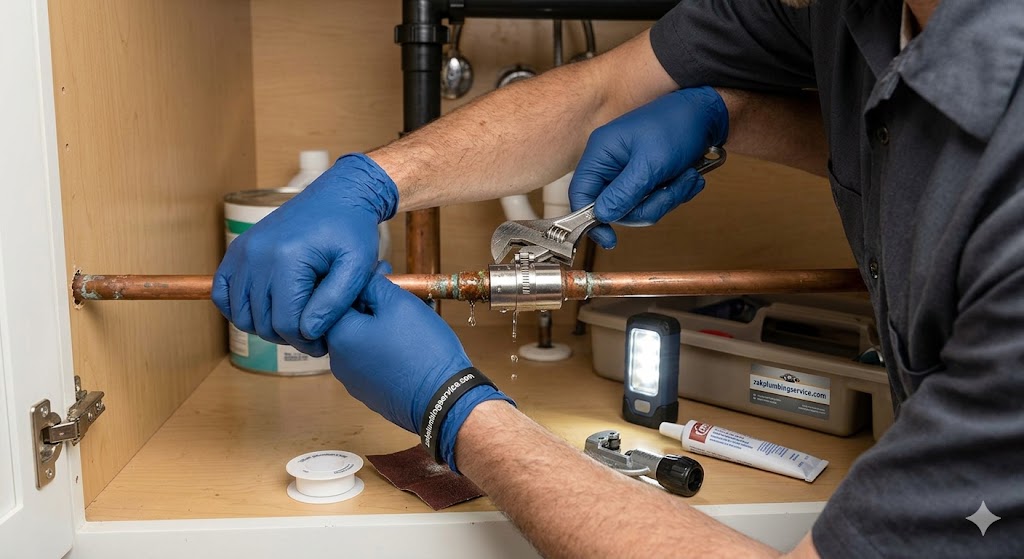
When you have a slightly larger crack or a burst pipe section, tape or putty might not cut it. That is where a slip coupling or a push-to-connect fitting comes into play. Brands like SharkBite have made this step so simple that anyone can do it. These fittings use special metal teeth and rubber rings to grip onto the pipe without needing any glue or soldering torches. It is a slightly more involved repair, but it is incredibly reliable for residential lines.
For this trick, you will need a basic pipe cutter to slice out the damaged section of the pipe. Make sure your cuts are straight and clean, then use a small deburring tool to smooth out the rough edges of the cut metal or plastic. Once the pipe ends are smooth, you simply push the slip coupling onto one side and slide it back over the other side. You will hear a click, or feel it seat firmly into place, which means you just successfully replaced the bad section of your line.
Modern 2026 Innovations and How to Repair Leaky Pipe Issues for Good
Plumbing has evolved a lot over the last couple of years, and home maintenance is getting much smarter. In 2026, the biggest trend is preventing leaks before they can even flood your house. High-tech smart leak detectors are now very affordable and easy to install. These little IoT sensors sit near your water heater, under sinks, or by washing machines, and they constantly monitor for moisture. If a pipe cracks while you are away at work, the sensor sends a warning straight to your smartphone, and premium models will even shut off your main water valve automatically.
Another major shift we are seeing this year is the massive move away from traditional copper or rigid PVC toward flexible PEX piping systems. Contractors prefer PEX because it is highly flexible, meaning it can bend around corners without needing a bunch of joints and fittings. Fewer joints mean fewer spots where a leak can develop down the line. Plus, PEX resists corrosion and does not get those tiny pinhole leaks that older copper pipes always seem to suffer from after a decade of service.
Quick Comparison Guide: Materials and How to Repair Leaky Pipe Damages
Instead of staring at a complicated chart, let us break down the best fix for each specific pipe emergency using quick, easy points.
- Copper Pipes with Tiny Pinhole Leaks: Your best option is self-fusing silicone tape because it wraps tightly around the rigid metal and stops high pressure instantly.
- Plastic PVC Drain Pipes with Hairline Cracks: Heavy-duty plumbing epoxy putty works best here because you can mold it perfectly around the plastic fittings and joints.
- Copper or PEX Pipes with Large Bursts: A push-to-connect slip coupling is the ideal choice, allowing you to cut out the bad section and snap a new piece into place without heat.
- Temporary vs Permanent Fixes: Always remember that silicone tape and epoxy putty are temporary band-aids to stop immediate water damage, while a slip coupling can last much longer if installed correctly.
Conclusion: Mastering How to Repair Leaky Pipe Like a Pro
At the end of the day, knowing how to handle a sudden leak keeps you in control of your home. These three ultimate tricks will buy you plenty of time and protect your property from expensive mold and structural damage. However, temporary fixes are called temporary for a reason, you still need a long-term solution to ensure your plumbing is completely safe. If you run into a leak that is too big to handle, or if you want a professional upgrade to modern, leak-resistant PEX piping, do not hesitate to contact the expert team at Zak Plumbing to get it fixed right the first time.