Have you ever been sitting in your living room, minding your own business, when suddenly it sounds like someone is taking a sledgehammer to your walls? That loud, startling bang whenever the washing machine stops or the toilet finished flushing isn’t a ghost, it is a common plumbing nightmare known as water hammer.
Read: How to Fix a Running Toilet: 7 Simple Steps to Stop Wasting Water
As we move through 2026, our homes are getting smarter, but our pipes are getting under more pressure. High-efficiency appliances use quick-closing valves that snap shut in milliseconds. This stops the water flow so fast that the energy has nowhere to go but back into your pipes, causing them to rattle and eventually leak.
The Zakplumbingservice share the information about why the water hammer arrestor is your plumbing system’s best friend. I’ll show you seven “shocking” fixes that can save your pipes from an early retirement, updated with the latest 2026 industry standards.
Read: How to Unclog a Toilet: 7 Proven Ways Fast
Understanding the Chaos: What is Water Hammer?
Before we fix it, let’s talk about what’s actually happening. Imagine a train traveling at full speed that suddenly hits a brick wall. That is essentially what water does inside your copper or PEX lines when a valve shuts off. The technical term is “hydraulic shock.”
Without a water hammer arrestor to act as a cushion, this shockwave travels at over 4,000 feet per second. This pressure spike can be four times higher than your normal water pressure, which is why your pipes sound like they are screaming for help.
Read: How Do You Clean a Toilet Tank: 5 Essential Hacks for a Brilliant Result
Why the Water Hammer Arrestor is Essential in 2026
Modern plumbing codes in 2026 have become much stricter. With the rise of “Smart Home” water monitors and high-speed solenoid valves in appliances, the old-school method of just “draining the air pockets” doesn’t work anymore. You need a dedicated mechanical device.
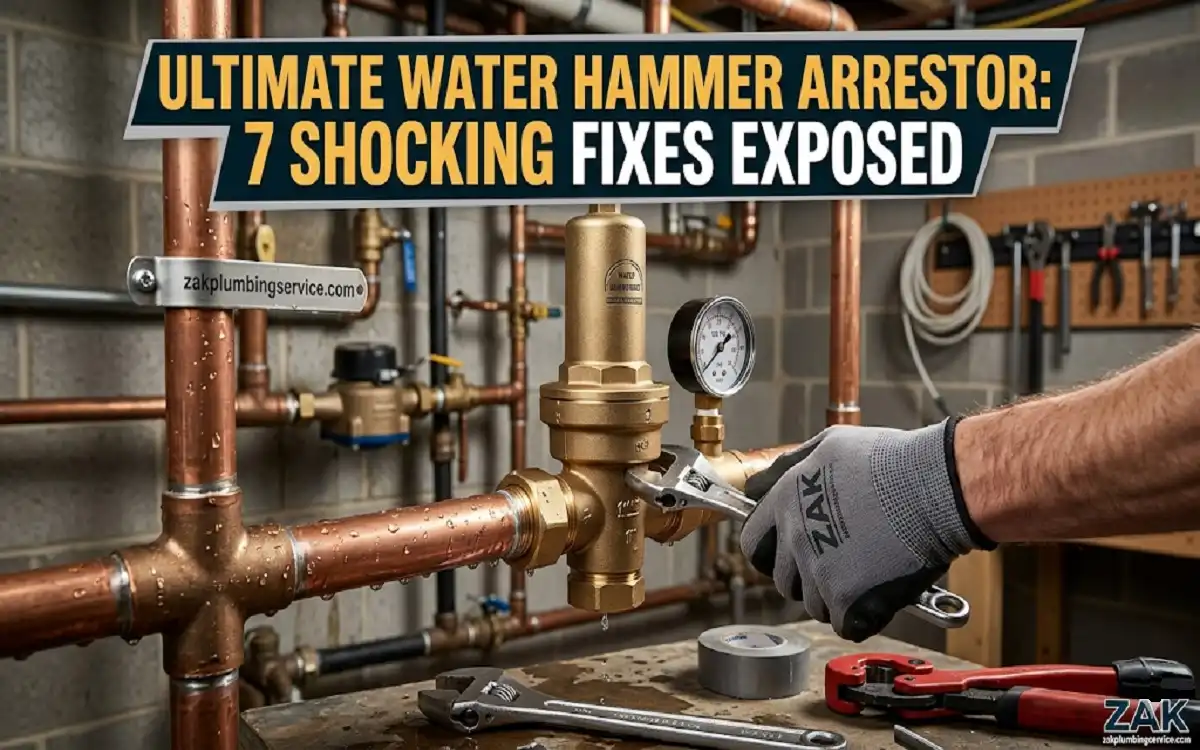
A water hammer arrestor is a small, sealed chamber with a piston and a cushion of air (or gas). When the pressure spike hits, the piston moves against the air, absorbing the energy like a car’s shock absorber.
Read: Flushing Away Clogs: 7 Ultimate Secrets for an Effortless Shower Drain
7 Shocking Fixes for Water Hammer
1. The Appliance “Point of Use” Install
The most common mistake people make is putting the arrestor in the wrong spot. To stop the noise at the source, you should install a water hammer arrestor directly onto the hot and cold water valves of your washing machine or dishwasher. In 2026, manufacturers now offer “threaded tee” arrestors that you can screw on by hand without even needing a wrench.
2. Recalibrate Your Pressure Regulator
Sometimes the problem isn’t the valve, it is the pressure coming into your house. If your home’s pressure is over 60 PSI, you are asking for trouble. Check your Pressure Reducing Valve (PRV) near the main shut-off. Lowering it to a steady 50 PSI can drastically reduce the intensity of the hammer.
3. Upgrade to Piston-Style Arrestors
If you have old “air chambers” (just vertical stubs of pipe), they have likely filled with water and become useless. The 2026 standard is the piston-style water hammer arrestor. These are permanently sealed, meaning they never lose their air cushion and don’t require maintenance.
4. Secure the “Ghost” Pipes
Sometimes the bang is actually the pipe hitting a wooden stud. Use plastic “J-clips” or padded pipe hangers to secure any loose lines in the basement or crawlspace. If the pipe can’t move, it can’t bang.
5. The Toilet Valve Swap
If your toilet makes a “thump” when it stops filling, your fill valve might be the culprit. Replacing a standard valve with a “slow-close” fill valve can reduce the shock wave before it even reaches the water hammer arrestor.
6. Install an Expansion Tank
If the banging happens when your water heater kicks on, it might be thermal expansion. Adding a small expansion tank near your water heater works in tandem with a water hammer arrestor to keep the entire system’s pressure stable.
7. Strategic Tee-Branch Placement
For main lines that rattle, plumbers now recommend installing a water hammer arrestor at the end of a long pipe run. This catches the wave at its peak before it can bounce back and rattle the whole house.
Read: Shower Drain Unblocker: 7 Powerful Ways to Instantly Clear Clogs
Important Installation Data
Instead of a complex chart, here are the key takeaways you need to know for a successful setup:
- Standard Operating Pressure: Most residential arrestors are rated for up to 150 PSI, but they work best in systems kept between 40 and 60 PSI.
- Temperature Range: Modern units can handle everything from 33°F up to 180°F, making them safe for both cold lines and hot water heaters.
- Placement Rule: For maximum effectiveness, the water hammer arrestor should be installed within 6 feet of the fast-closing valve.
- Vertical vs. Horizontal: 2026 models are designed to be “position insensitive,” meaning you can install them sideways or upside down and they will still work perfectly.
- Expected Lifespan: A quality stainless steel or copper piston arrestor is designed to last for roughly 10,000 to 50,000 cycles, often outliving the appliance it protects.
Read: How to Unclog Toilet Bowl Without Plunger: 5 Epic Tricks That Work Fast
Final Thoughts for Homeowners
Don’t ignore the banging in your walls. What starts as an annoying noise can quickly turn into a burst pipe or a flooded laundry room. By installing a water hammer arrestor, you are investing in the long-term health of your home’s plumbing.
If you’ve tried these fixes and still hear that dreaded thud, it might be time to call in the pros. At Zak Plumbing Service, we’ve seen every type of pipe rattle imaginable, and we have the tools to quiet your home for good.
For More Details Visit Zak Plumbing Service Contact Page