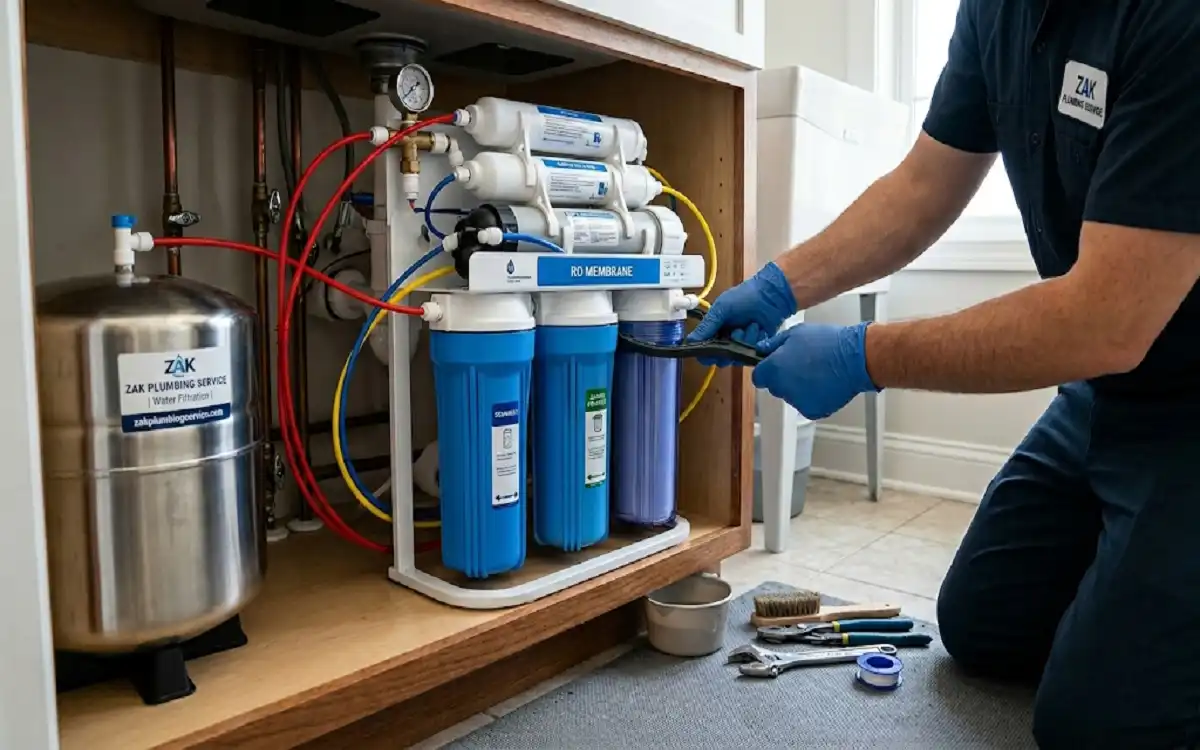
Having a water filtration system is like having a silent guardian for your health, but even guardians need a little TLC sometimes. In 2026, water quality standards have become tighter, and the tech inside your home systems has gotten way smarter. If you neglect Water Filtration Maintenance, you aren’t just risking a funny taste in your tea, you are looking at massive repair bills that could have been avoided with a few simple habits.
Read: Clogged Drain Service Near Me: 7 Life-Saving Tips to Avoid a Costly Mess
At Zak Plumbing Service, we see it all the time. A small filter that costs $30 gets ignored, and suddenly the entire $2,000 Reverse Osmosis unit is fried. This guide is going to walk you through the exact tactics you need to keep your water crystal clear and your wallet full.
Why Water Filtration Maintenance Is Your Best Financial Move
Most homeowners think of their water filter as a “set it and forget it” appliance. That is a dangerous mistake. By the time you notice your water pressure dropping or a weird smell, the damage might already be done to the internal membranes.
The latest 2026 systems now often feature “Smart Monitoring” sensors. While these are great for alerts, they can’t physically swap a clogged pre-filter for you. Regular Water Filtration Maintenance ensures that these sensitive sensors don’t get corroded by sediment buildup. Think of it like changing the oil in your car; if you wait for the engine to smoke, you’ve waited too long.
5 Tactics for Effective Water Filtration Maintenance
If you want to stay ahead of the game, follow these five proven strategies. These are designed to handle the modern contaminants we’re seeing more of this year, like microplastics and increased chemical runoff.
Read: Water Pipe Maintenance: 7 Essential Tips for the Best Home Plumbing
1. Stick to a “Hybrid” Schedule
In 2026, we see a lot of multi-stage systems. You cannot treat every part of the system the same.
- Sediment Pre-filters: These should be swapped every 3 to 6 months. They catch the “big stuff” like rust and sand.
- Carbon Filters: Change these every 6 to 12 months to keep your water tasting fresh and free of chlorine.
- RO Membranes: These are the heart of many systems and usually last 2 to 3 years, but only if the pre-filters are doing their job.
2. Sanitize the System Annually
It is not enough to just swap filters. Bacteria can sometimes grow in the housing units or the storage tanks. Once a year, you should perform a full system sanitization. This involves using a food-grade sanitizer (or a very mild bleach solution recommended by the manufacturer) to flush out the lines. This prevents “bio-growth” which can lead to costly “slug” repairs where the whole line has to be replaced.
3. Monitor Your Water Pressure
A sudden drop in water pressure at your kitchen sink is a giant red flag. It usually means a filter is so packed with gunk that water can’t squeeze through. This puts immense back-pressure on your pipes and the filtration unit itself. Check your gauges monthly. If you see a 10% to 15% drop, it is time for Water Filtration Maintenance.
4. Calibrate Your Smart Sensors
If your 2026 model has Wi-Fi connectivity or TDS (Total Dissolved Solids) meters built-in, don’t trust them blindly. Every year, use a handheld TDS tester to verify the system’s reading. Sensors can get “drift” or become coated in minerals, giving you a false sense of security while your water quality actually plummets.
5. Professional “Deep Health” Check
Even the best DIYer can miss tiny hairline cracks in a housing unit or a slow leak in a bypass valve. Having a pro from Zak Plumbing Service come out once a year ensures that the “bones” of your system are solid. We check the seals, the valves, and the flow restrictors that most people don’t even know exist.
Vital Maintenance Tasks at a Glance
Instead of a complex chart, here is the essential breakdown of what you need to track. Keeping these points in mind will save you from an emergency plumbing call on a Sunday night.
- Monthly Visual Check: Look for any drips or “sweating” around the canisters. Catching a leak early prevents floor damage.
- Quarterly Filter Swap: For high-use households, the 3-month mark is the “sweet spot” for sediment filters.
- Bi-Annual TDS Testing: Check the “Total Dissolved Solids” in your tap water vs. your filtered water. If the filtered number is climbing, your membrane is failing.
- Annual O-Ring Lubrication: Use a silicone-based lubricant on the rubber O-rings during filter changes to prevent them from drying out and cracking.
- System Flush: After every filter change, run the water for 5 to 10 minutes to flush out any loose carbon dust or air bubbles.
The Hidden Costs of Neglecting Your System
What actually happens if you skip Water Filtration Maintenance? It’s more than just bad-tasting water.
First, you have the Energy Drain. Clogged filters make your system work harder, which can actually spike your home’s energy or water waste (especially in RO systems). Second, you face Component Failure. A bypass valve that hasn’t been moved in three years will likely seize up, meaning if you ever have a leak, you won’t be able to turn the water off easily.
Finally, there is the Health Risk. Older filters can actually become a breeding ground for bacteria if they are left in past their expiration date. In 2026, with the rise of more resilient waterborne pathogens, keeping your “defense line” clean is non-negotiable.
Wrapping It Up
At the end of the day, Water Filtration Maintenance is about peace of mind. You invested in a system because you care about what your family drinks. Don’t let that investment turn into a liability because of a few forgotten calendar reminders.
If you’re feeling overwhelmed by the technical side of things, or if your system is acting “finicky,” give us a call at Zak Plumbing Service. We’ve been keeping the water clean and the pipes happy for years, and we’d love to help you keep your system running like new well into 2027 and beyond.
For More Details Visit Zak Plumbing Service Contact Page.