Do you ever feel like your soap just isn’t lathering like it used to, or maybe you’ve noticed those annoying white spots on your glassware? If so, your water softener might be crying for help. In 2026, home water systems have become more advanced, but the basics of Water Softener Repair still trip up even the most well meaning homeowners.
At Zak Plumbing Service, we see it all the time. A small issue that could have been a quick fix turns into a multi-thousand dollar replacement because of a few simple oversights. Let’s dive into the common traps and how you can keep your water feeling great without breaking the bank.
Read: Replace Sewer Line: 7 Essential Ways to Avoid a Costly Home Disaster
Why Water Softener Repair is Different in 2026
Technology has moved fast. In 2026, many systems now use AI-driven “Cognitive Controllers” that predict when the resin is going to fail. However, even with all these smart sensors, the physical parts of the machine still wear out. Calcium and magnesium are tough on equipment, and the salt itself is corrosive.
Waiting too long to address a small leak or a strange clicking sound is the fastest way to ruin a whole house system. If you ignore the warning signs, you aren’t just looking at a broken appliance, you’re looking at ruined pipes and a water heater that will die years before its time.
Mistake 1: Ignoring the “Salt Bridge” Ghost
One of the most common reasons people call us for Water Softener Repair is because their water has turned hard, even though the salt tank looks full. This is often a “salt bridge.” It is a hard crust that forms over the water level, making it look like there is plenty of salt when, in reality, there is just an empty cavern underneath.
When this happens, the brine solution can’t be created. Your system goes through the motions of “cleaning” itself, but it’s just rinsing with plain water. This leaves your resin beads “un-charged” and unable to grab the minerals from your tap water.
Essential Repair Costs and Components (Points-based Data)
Instead of a standard table, here is the breakdown of what you should expect regarding Water Softener Repair costs and parts in 2026:
- Typical Repair Price Range: Most homeowners are currently spending between $165 and $985 for professional repairs, depending on the severity of the leak or motor failure.
- Resin Bead Replacement: If your water stays hard despite salt being present, the resin might be worn out. Replacing these beads typically costs between $210 and $420.
- Brine Tank Issues: A cracked or heavily fouled brine tank can be replaced for about $130 to $715.
- Control Valve Maintenance: The “brain” of your system is the most expensive part. If the motor or circuit board fails, expect parts and labor to land between $310 and $650.
- Hourly Labor Rates: In 2026, professional plumbing labor for specialized water systems generally ranges from $50 to $160 per hour.
How to Spot a Salt Bridge Early
You can check this yourself by taking a broom handle and gently pushing down on the salt. If the top layer feels like solid rock and doesn’t budge, you have a bridge. Carefully breaking this up can often save you a service call, but be careful not to puncture the sides of the tank!
Mistake 2: Using the Wrong Type of Salt for Your System
Not all salt is created equal. In 2026, we have various options like pellets, solar crystals, and block salt. A major mistake is mixing these or using a low grade rock salt that contains high levels of dirt or insoluble minerals. This “dirty” salt creates a “mush” at the bottom of your tank, which can clog the intake valves.
Newer high efficiency resins are also more sensitive. If you use salt with too many additives, you might actually “poison” the resin bed, leading to a very expensive Water Softener Repair that involves dumping and replacing the entire tank of beads.
Modern 2026 Resins and Salt Compatibility
The latest resins are designed to last 15 years, but they require high purity salt to do so. Always check your manufacturer’s manual. If you have a high efficiency “green” system, using standard rock salt is a recipe for a clogged injector and a very frustrated plumber.
Mistake 3: DIY-ing Complex Valve and Motor Issues
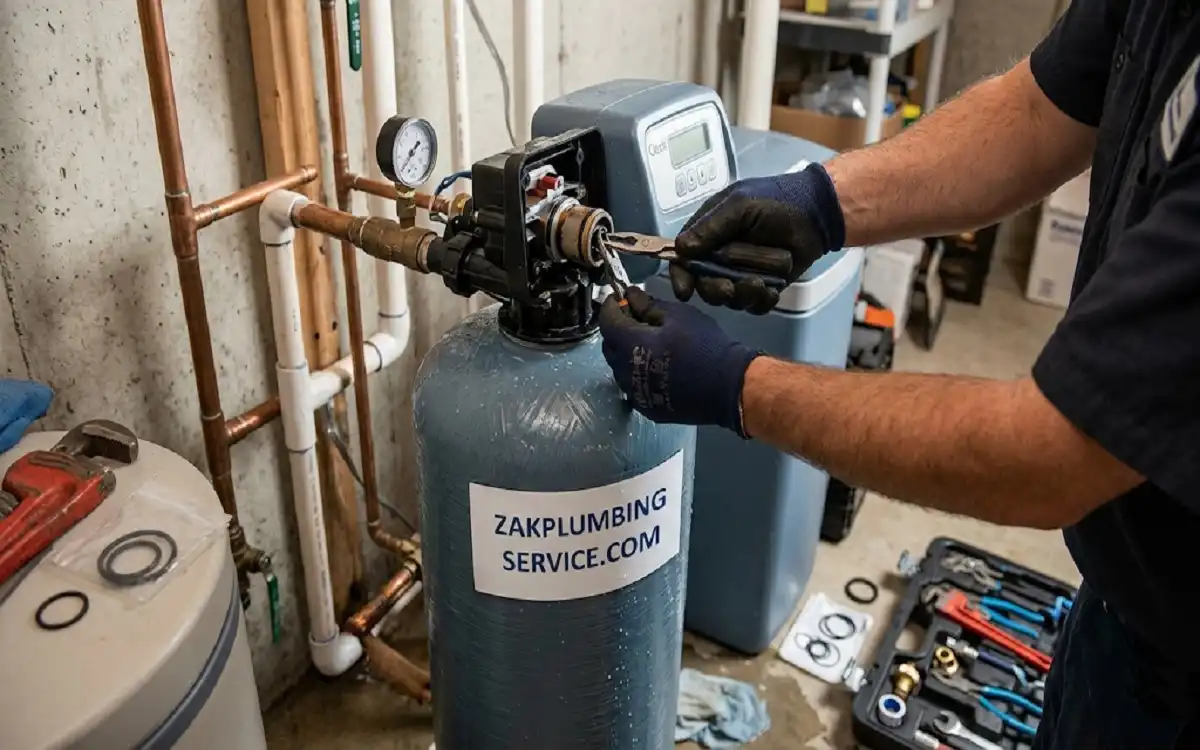
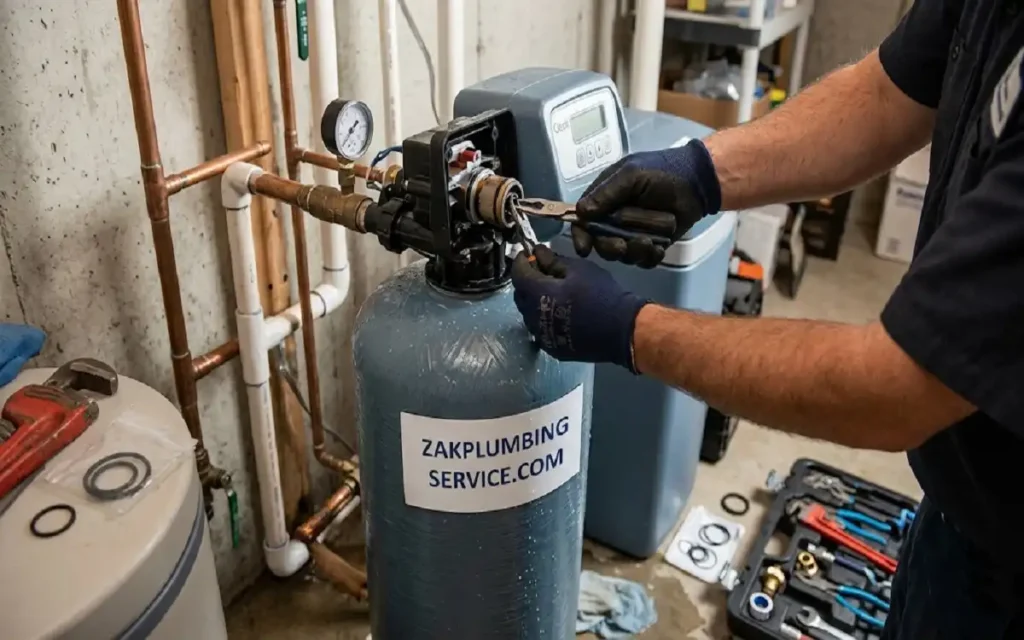
We love a good weekend warrior, but the control valve of a water softener is a complex piece of machinery. It involves intricate gears, seals, and spacers that must be aligned perfectly. If you take it apart and lose a single small O-ring, your system will likely leak or, worse, get stuck in a permanent backwash cycle.
A system stuck in backwash can waste hundreds of gallons of water in a single night. This doesn’t just hurt the environment, it can flood your basement or burn out your well pump if you’re not on city water. Knowing when to stop and call for professional Water Softener Repair is the sign of a smart homeowner.
When to Call a Water Softener Repair Pro
If you see water pooling around the base of the unit, hear a grinding noise during the regeneration cycle, or see an error code on the digital display that won’t go away after a reset, it is time to call Zak Plumbing Service. These are signs of mechanical or electronic failure that require specialized tools to diagnose correctly.
Read: Commercial Plumbing Service in NJ: 7 Proven Secrets for Flawless Maintenance
Repair vs. Replace: Making the Right Call
Sometimes, the best Water Softener Repair is actually a replacement. If your unit is over 10 to 12 years old and the motor has died, the cost of parts and labor might be 50% of the cost of a brand new, more efficient system. In 2026, new models use 40% less salt and water, meaning they often pay for themselves in just a few years.
Always ask your technician for an honest assessment. If the tank is leaking or the resin is “channeled,” it is usually better to upgrade to a modern unit with a better warranty.
Read: Sink Traps Plumbing: 7 Essential Secrets for a Flawless Installation
Final Thoughts
Taking care of your water is taking care of your home. By avoiding these three big mistakes, you can ensure your system stays healthy for years to come. If you ever find yourself in over your head, remember that expert help is just a phone call away. Don’t let a small salt bridge turn into a major plumbing disaster!
For More Details Visit Zak Plumbing Service Contact Page