Most homeowners do not think about what happens when they flush the toilet. It is one of those things that just works, until it doesn’t. If you own a home with a Septic Tank Pumping system, you are essentially running your own mini waste treatment plant in your backyard. It is a big responsibility. If you ignore it, you are looking at a messy, smelly, and very expensive disaster. In 2026, things have changed a bit with new tech and rules, so here is the real talk on how to keep your home safe.
Read: Clogged Drain Service Near Me: 7 Life-Saving Tips to Avoid a Costly Mess
Why Regular Septic Tank Pumping is the Lifeblood of Your Home
Think of your septic tank like the oil in your car. You can drive for a long time without changing it, but eventually, the engine will seize up. A septic tank collects all the solids from your house. Over time, these solids build up and turn into sludge. If that sludge gets too high, it starts flowing out into your drain field. Once your drain field is clogged with waste, you are in big trouble. Regular Septic Tank Pumping is the only way to get those solids out before they ruin the rest of the system. It is much cheaper to pay for a pump out than to replace the whole yard.
Read: Emergency Plumbing Near Me: 5 Brilliant Hacks to Stop a Flood Fast
Secret 1: The 2026 Smart Sensor Revolution in Septic Tank Pumping
We are living in the future now. In 2026, many homes are installing smart IoT sensors inside their tanks. These little gadgets monitor the levels of sludge and scum in real-time. This is a game changer for Septic Tank Pumping because it takes away the guessing game.
Instead of just hoping you are pumping at the right time, your phone will send you an alert. It tells you exactly when the tank is 30 percent full. This prevents you from pumping too early and wasting money, but it also makes sure you never wait too long.
Read: Emergency Plumbing: 7 Essential Fixes to Save Your Home from Disaster
Secret 2: Recognizing the “Quiet” Signs You Need Septic Tank Pumping
You do not have to wait for a backup to know there is a problem. Sometimes the signs are very quiet. Have you noticed that your grass is suddenly very green and lush right over the tank? That might look pretty, but it usually means the tank is leaking extra nutrients into the soil because it is full.
Also, if your drains are gurgling or the sinks are slow, it is a cry for help. Routine Septic Tank Pumping can fix these small issues before they turn into a flood in your basement.
Read: Water Pipe Maintenance: 7 Essential Tips for the Best Home Plumbing
Secret 3: How Bio-Septic Upgrades Change Your Septic Tank Pumping Schedule
A lot of people in 2026 are switching to “Bio-Septic” systems. These systems use special aerators to help bacteria break down waste much faster than old systems. Because the waste breaks down so well, you might find that your Septic Tank Pumping schedule changes.
Some people can go much longer between visits from the truck. However, you still need to have it checked.
Even the best bacteria can’t eat everything, and those leftover solids still need to be removed eventually.
Read: United Airlines Plumbing Malfunction U-Turn: 1 Shocking and Disastrous Experience
Secret 4: The Truth About Additives vs. Real Septic Tank Pumping
There are a lot of products at the store that claim they can “clean” your tank so you never have to pump. To be honest, most of these are a waste of money. While some enzymes can help a little, they can never replace professional Septic Tank Pumping.
In fact, some chemicals can actually hurt the natural bacteria in your tank. The best thing you can do for your system is to keep it simple. Don’t rely on a magic bottle, rely on a professional plumber who knows what they are doing.
Read: Commercial Plumbing Service in NJ: 7 Proven Secrets for Flawless Maintenance
Secret 5: Why New 2026 Environmental Laws Affect Your Septic Tank Pumping
Governments are getting much stricter about groundwater protection this year. In many areas, there are new 2026 regulations that might require you to show proof of Septic Tank Pumping every few years. This is to protect the local water supply from contamination.
If you don’t stay on top of your maintenance, you could face fines in some counties. Keeping your records up to date with a service like Zak Plumbing is the best way to stay compliant and keep the environment clean.
Read: Sink Traps Plumbing: 7 Essential Secrets for a Flawless Installation
Secret 6: Protecting Your Drain Field to Reduce Septic Tank Pumping Costs
Your drain field is the most sensitive part of the system. If you park a car on it or plant trees with deep roots near it, you are asking for a headache. When the drain field stops working, the tank fills up much faster, leading to more frequent Septic Tank Pumping needs. Keep the area clear and only plant grass.
This allows the soil to breathe and process the water properly, which keeps your whole system running smooth for decades.
Read: Aaron the Plumber Fight: 7 Shocking Moments from that Brutal Match
Secret 7: Selecting the Best Professional for Your Septic Tank Pumping
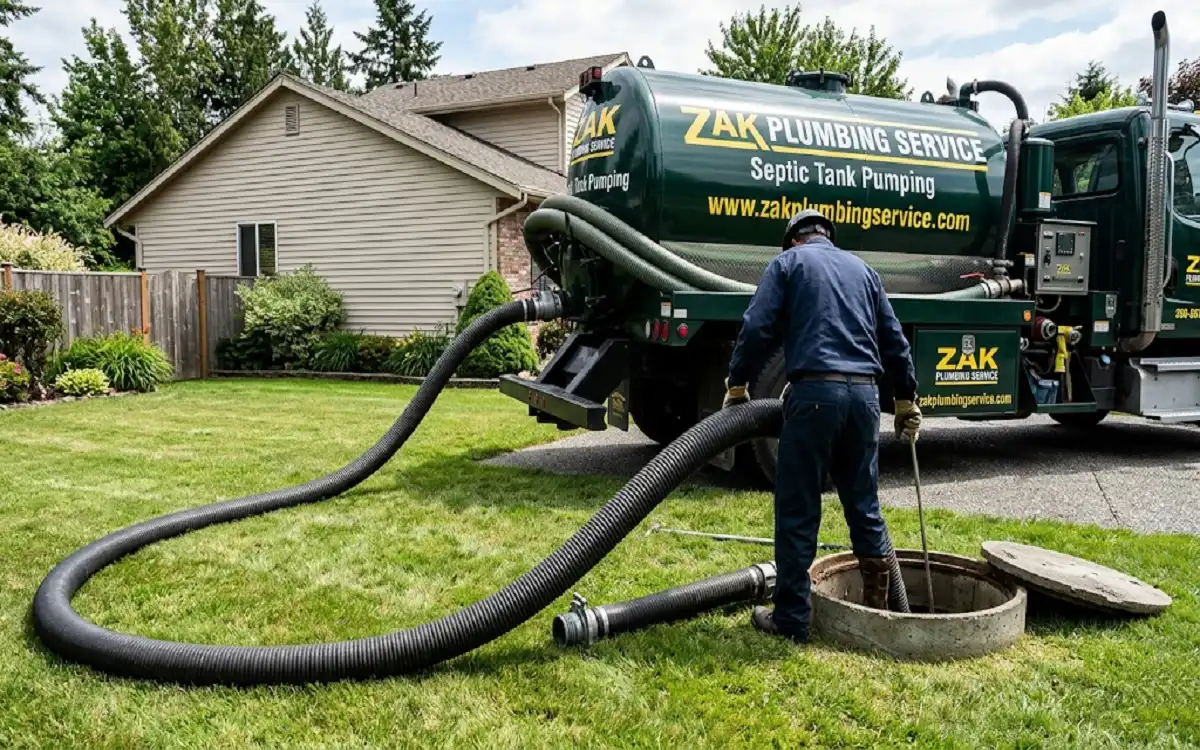
Not all plumbing services are the same. When you look for Septic Tank Pumping, you want someone who does more than just suck out the waste. A true pro will inspect the baffles, check for cracks, and make sure the filters are clean.
At Zak Plumbing, we take pride in doing a full checkup every time. We make sure teh job is done right so you don’t have to worry about a surprise backup in the middle of the night.
Read: Advanced Plumbing & Rooter Service Reviews: 10 Proven Insights from Their Best Customers
Useful Information (Points instead of a Table)
Instead of a table, here is the data broken down into easy points:
- Standard Pumping Frequency: For a family of four, you usually need a pump out every 3 to 5 years.
- 2026 Smart System Frequency: If you have new IoT sensors, you might only pump when the alert tells you, which can save you money by waiting up to 6 or 7 years if usage is low.
- Estimated Cost in 2026: Professional pumping currently ranges from $300 to $700, depending on your tank size and how deep the lids are buried.
- System Lifespan: A well-maintained concrete tank can last 40 years, while a neglected one might fail in just 12 years.
- Bio-Septic Efficiency: Modern bio-tanks reduce sludge buildup by 30 percent compared to old-school gravity tanks.
Read: Emergency plumber near me: 5 Essential Secrets for Reliable 24/7 Service
Protecting Your Investment with Routine Septic Tank Pumping
At the end of the day, your home is likely your biggest investment. Taking care of the “invisible” parts like the septic system is just as important as fixing the roof. Regular Septic Tank Pumping is the secret to a stress-free life as a homeowner.
It is simple, it is affordable when compared to the cost of repairs, and it keeps your family safe. Don’t wait until the smell starts to reach the living room, give us a call and get your tank serviced today. You will sleep much better knowing everything is flowing just fine.
For More Details Visit Zak Plumbing Service Contact Page