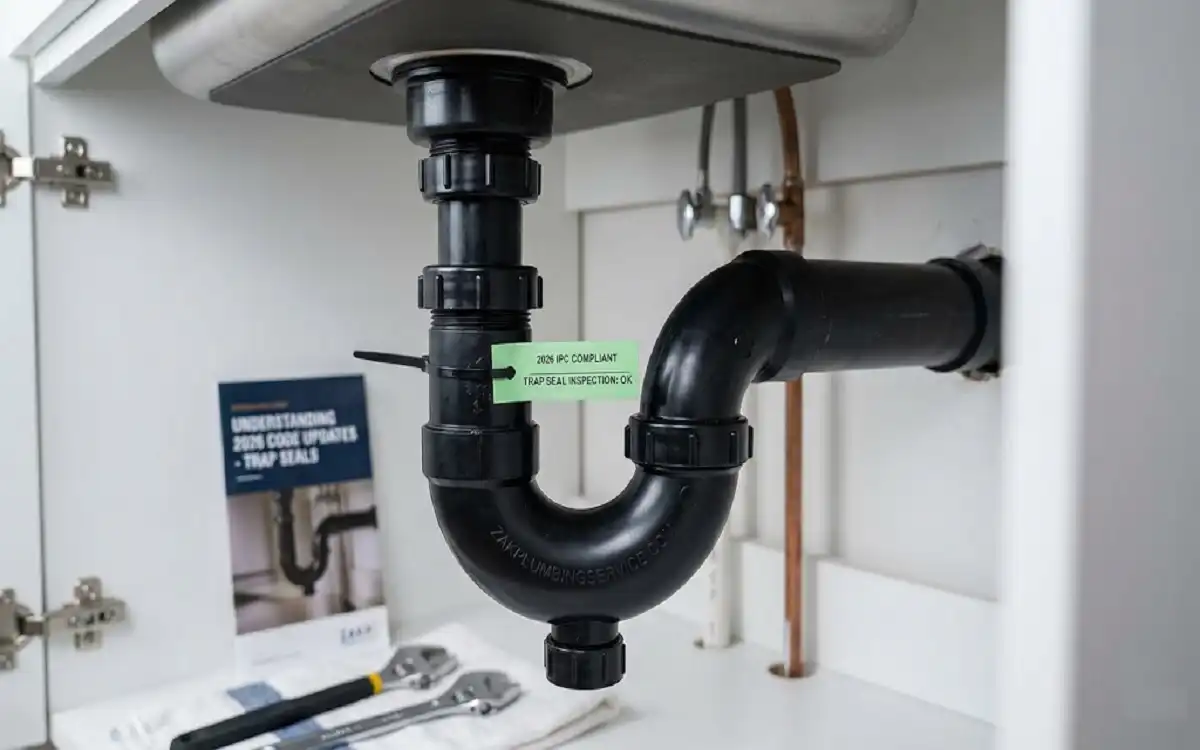
The hidden curve of your drainpipe is currently the center of a massive regulatory shift that could double your repair costs this year. Our team at Zak Plumbing Service has been tracking the new 2026 International Plumbing Code amendments that demand stricter trap seal protection across the board. If you haven’t checked the water level in your p trap lately, you might be inviting invisible hazards and expensive inspection failures into your home.
Read: Unclog Toilet: 5 Powerful Secrets for an Easy DIY Solution
Key Takeaways
- Code Compliance: New 2026 mandates require trap seal protection devices (like ASSE 1072 barriers) for all floor drains to prevent evaporation.
- Safety First: A dry p trap allows toxic sewer gas and methane to enter living spaces, posing significant health risks to residents.
- Material Shift: Starting May 1, 2026, all plumbing components must meet new lead-free standards, specifically impacting older brass p trap assemblies.
Why is the P trap buzzing in 2026?
Industry insiders are noting that the “simple” drain pipe is no longer a set-it-and-forget-it component.Our analysis suggests that the roll-out of the 2026 IPC amendments is the biggest change to residential drainage in over a decade. We found that inspectors are now prioritizing the liquid-seal depth, which must strictly remain between two and four inches to be legal. Failure to maintain this trap seal can lead to immediate red-tagging during a home sale or renovation. This isn’t just about red tape; it is about keeping your indoor air quality safe from the noxious fumes found in municipal sewer lines.
If your sink is gurgling, it is often the first sign that the p trap is losing its protective vacuum. According to the latest data from the American Society of Plumbing Engineers (ASPE), proper venting is the only way to prevent the siphoning effect that ruins these seals.
What does this mean for homeowners?
If you are planning a kitchen or bathroom remodel, you need to understand that S-traps are now strictly prohibited in almost every jurisdiction. We have seen countless DIY projects fail because they used the wrong drainage configuration for their new vanity.
A modern p trap must be self-scouring, meaning it is designed to use the force of water to flush out debris naturally. This prevents the buildup of hair and soap scum that typically leads to a clogged drain. Many homeowners are surprised to learn that a dry trap is the most common cause of “mystery smells” in the guest bathroom.
If a fixture isn’t used for weeks, the water evaporates, leaving a direct path for sewer gas to enter your bedroom. Our technicians often recommend a regular drain cleaning to ensure that biofilm doesn’t compromise the trap’s efficiency.
Comparison of 2026 P Trap Standards
| Feature | Standard Requirement | Why It Matters |
| Seal Depth | 2″ to 4″ (51 to 102 mm) | Prevents gas bypass and siphoning |
| Material | Lead-Free (0.25% max) | Health safety and WaterMark compliance |
| Vertical Distance | Max 24 inches | Ensures gravity-fed flow velocity |
| Protection | ASSE 1072 Barrier | Stops evaporation in floor drains |
What happens when the trap seal fails?
When a trap seal is compromised, it is rarely a quiet event for your plumbing system. You might hear strange gurgling sounds when the toilet flushes, indicating that air is being pulled through your sink’s p trap. This is a sign of poor ventilation, which the International Association of Plumbing and Mechanical Officials (IAPMO) identifies as a top cause of system failure. If you ignore these warnings, you risk exposure to methane and hydrogen sulfide, which are both flammable and toxic.Our team observed that many older homes still utilize metal traps that have slowly corroded from the inside out.A small pinhole leak in the bottom of the curve can ruin your vanity cabinet before you even see a puddle. It is vital to check for moisture or warping under your sinks at least once a month. If you detect a leak, calling an emergency plumber can save you from a complete floor replacement due to mold.
How to maintain your system effectively
Keeping your p trap in peak condition does not have to be a technical nightmare. Simply running water through every drain in your house once a week is the best way to prevent evaporation. For those with seasonal properties, industry experts suggest using a trap primer or a specialized barrier-type seal.
These devices are now mandatory in many 2026 codes to protect against sewer gas in floor drains. We also advise against using harsh chemical cleaners, as they can eat through the plastic or metal of your trap.
Instead, a simple mechanical cleaning or a professional inspection is much safer for your pipes.Our research found that most p trap clogs are actually located in the horizontal arm, not the curve itself. A professional plumber can use a drain camera to pinpoint the exact location of the blockage without tearing apart your walls.
Are you ready for the May 2026 deadline?
The transition to lead-free plumbing is perhaps the most significant logistical hurdle for the industry this year. By May 1, 2026, manufacturers in Australia and parts of North America must cease the production of non-compliant brass fittings. This means that the cheap p trap kit you find at the big-box store might soon be illegal to install.
According to the Master Plumbers Association, retailers are already clearing out old stock to make room for certified products. You should always look for the WaterMark or cUPC logo on any part you buy to ensure it meets these rigorous safety standards. If you are unsure if your current setup is compliant, our experts can perform a site audit to check your home’s status. Investing in high-quality, code-compliant parts today will prevent a major headache during your next property appraisal.
We believe that staying informed is the best way to keep your home safe and functional in this changing landscape. Don’t let a small piece of pipe become a massive financial burden because of a missed update.
For More Details Visit Zak Plumbing Service Contact Page