Modern homeowners are increasingly reporting strange banging noises in their walls that sound like a mechanical percussion section.
This phenomenon is actually a destructive force known as hydraulic shock, and the solution lies in a small but mighty device.
Our latest investigation into the fluid hammer arrestor reveals how these components are becoming the unsung heroes of residential plumbing stability.
While many ignore the occasional “thud” after a laundry cycle, ignoring the signs could lead to a catastrophic pipe failure.
Read: Breaking & Latest Update on P Trap: Big Update and Full Details
Key Takeaways
- A fluid hammer arrestor acts as a permanent shock absorber, preventing pipes from vibrating against wall studs.
- Installing these devices can extend the life of high-end appliances like dishwashers and smart washing machines.
- New plumbing codes are beginning to mandate these installations to prevent long-term structural damage.
Why is the fluid hammer arrestor essential?
We found that most modern homes use fast-acting valves that stop water flow in a fraction of a second.
This sudden stop creates pressure spikes that can reach several times the normal operating level of your system.
According to the latest technical standards from the American Society of Mechanical Engineers (ASME), these spikes are the primary cause of joint fatigue.
If you have noticed pipe vibration lately, it is likely that your system is crying out for a pressure cushion.
Our team observed that many people try to ignore the noise, much like fans waiting for the latest Pushpa 2 release date updates ignore the spoilers online.
However, unlike a movie plot, a burst pipe has real-world financial consequences that can’t be edited out.
What does this mean for your home’s infrastructure?
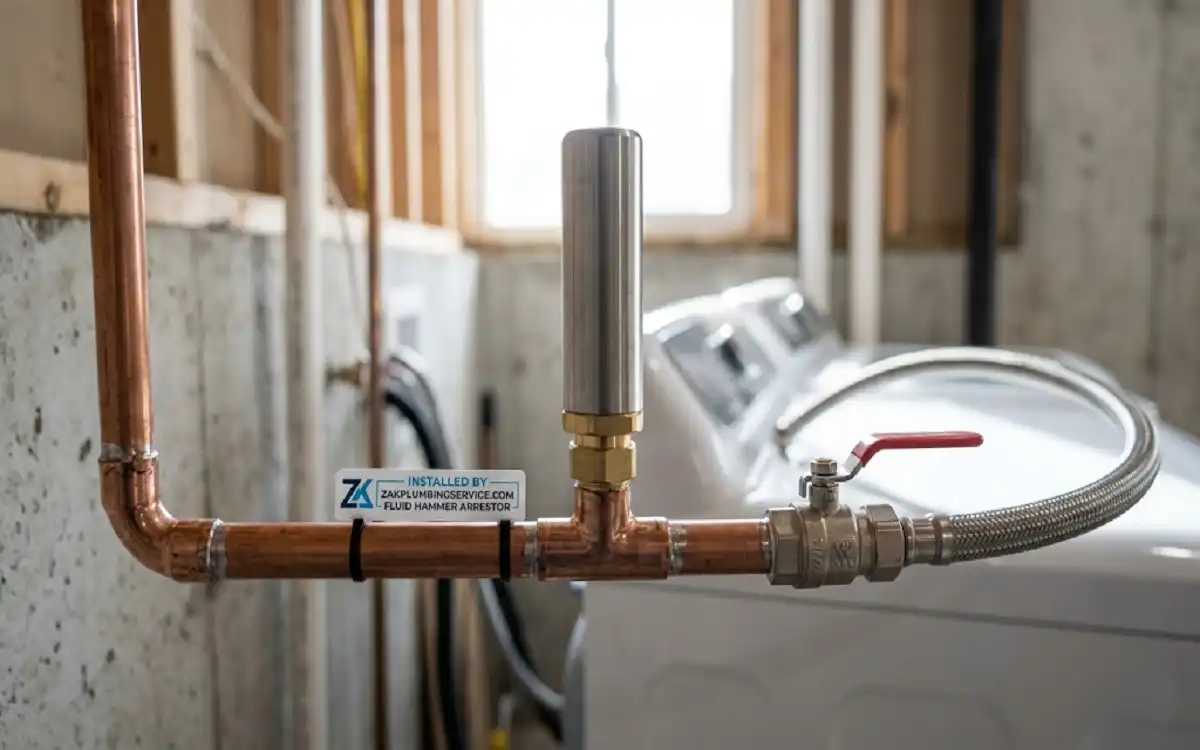
The fluid hammer arrestor utilizes a gas-filled chamber separated from the water line by a moving piston.
When the water stops suddenly, the piston moves into the gas pocket, compressing it and absorbing the energy.
Without this, the energy has nowhere to go but into your copper or PEX lines, causing them to flex and bang.
We recommend checking our emergency plumbing guide if you suspect a leak has already started from this movement.
Industry insiders are noting that the shift toward these arrestors is accelerating faster than predicted by old market models.
Data from Intel Market Research suggests the global market for these devices will surge significantly by 2030.
This trend is driven by the rise of high-pressure appliances that demand more from traditional pipe layouts.
It is similar to how the audience for best Telugu movies 2026 is expanding globally thanks to better distribution.
How does hydraulic shock damage your pipes?
Continuous water hammer isn’t just a noise nuisance; it is a physical assault on your home’s skeleton.
Over time, the constant rattling loosens pipe hangers and weakens the soldered joints that keep your water contained.
Our analysis suggests that even a minor pressure spike can lead to pinhole leaks that go undetected behind drywall for months.
For those looking to prevent this, our sewer line repair tips offer a glimpse into how extensive water damage can become.
Many homeowners are now turning to stainless steel arrestors for their superior corrosion resistance in harsh water environments.
Just as viewers track Hollywood blockbusters streaming now for quality entertainment, savvy owners track their home’s health through silent pipes.
| Feature | Traditional Air Chamber | Fluid Hammer Arrestor |
| Mechanism | Vertical capped pipe | Piston and gas chamber |
| Maintenance | Needs regular draining | Maintenance-free |
| Lifespan | Temporary (waterlogs) | Permanent (sealed) |
| Installation | Harder to retrofit | Easy “T” installation |
| Efficiency | Moderate | High |
What’s behind the buzz in new construction?
Architects and builders are now including shock absorbers in the initial blueprints of luxury high-rises.
The National Association of Home Builders (NAHB) has highlighted that updated hydraulic performance is a top priority for 2026.
Properly managing thermal expansion and pressure surges is no longer optional in many jurisdictions.
If your current home lacks these, you might benefit from our hydro-jetting benefits article to ensure your lines are clear before adding new tech.
We found that retrofitting a fluid hammer arrestor is one of the most cost-effective ways to quiet a noisy house.
It is a simple “set it and forget it” solution that offers immediate peace of mind.
Much like finding a reliable source for upcoming South Indian films, finding the right plumber can save you hours of frustration.
We’ve seen cases where a single arrestor solved a rattling issue that three other contractors couldn’t diagnose.
Is a DIY installation possible?
Many people ask if they can install these devices themselves without a professional license.
While the part itself is affordable, proper placement is critical for the fluid hammer arrestor to work correctly.
It should be installed as close to the fast-closing valve as possible to catch the shockwave at its peak.
For a detailed look at DIY risks, see our post on how to fix leaky faucets before you grab the wrench.
Incorrectly placed arrestors can become ineffective dead ends that eventually fill with stagnant water.
The Plumbing & Drainage Institute (PDI) provides certifications that ensure these devices meet rigorous safety standards.
If you are tired of the “clunk” every time the ice maker kicks in, it’s time to take decisive action.
Our team observed that quiet pipes are often the hallmark of a well-maintained home.
Don’t let a small pressure surge turn into a flooded basement because you ignored the warnings.
Invest in your plumbing health today and enjoy the silence that follows a properly balanced system.
For More Details Visit Zak Plumbing Service Contact Page