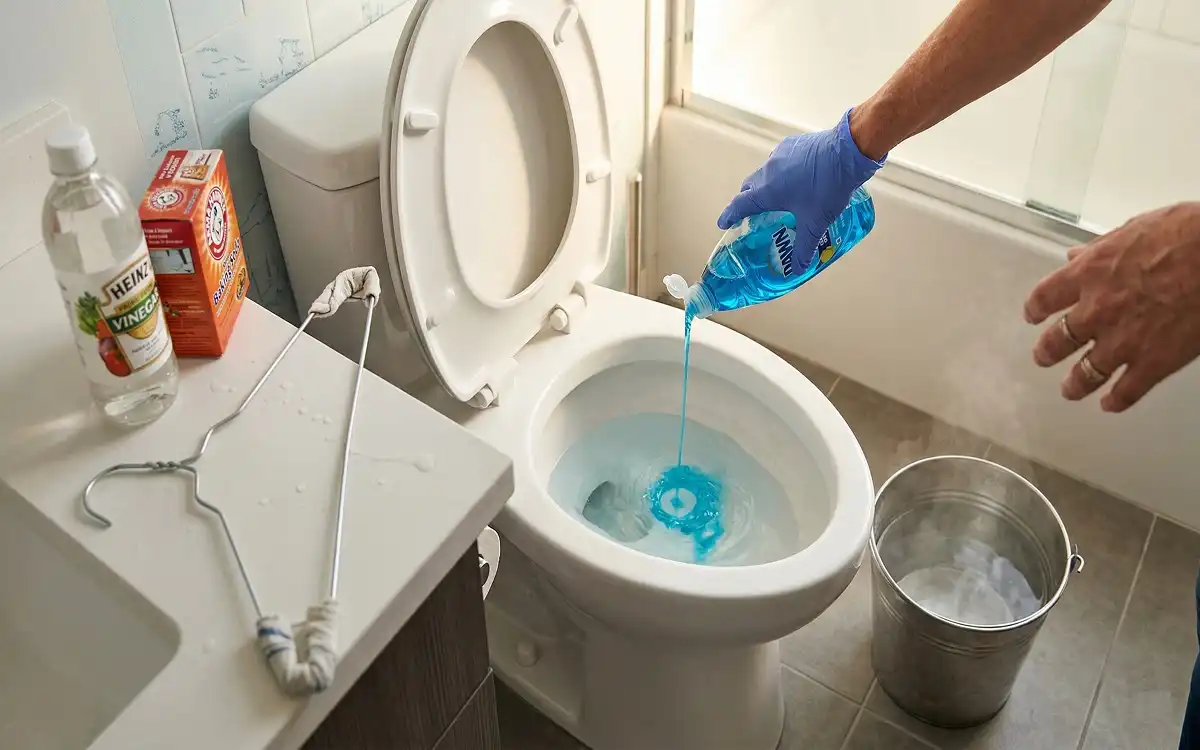
Every Texas homeowner relying on a septic system faces one unavoidable reality: neglect costs far more than maintenance.
Searching for septic tank pumping near me is often the first step after noticing slow drains, foul odors, or soggy yard patches.
Acting fast protects your property, your family’s health, and your wallet.
Sewer Line Clean Out: 3 Simple Steps to a Perfect System
Key Highlights:
- Septic tanks in Texas typically need pumping every 3 to 5 years, depending on household size and usage
- Ignoring pumping schedules can lead to system failure, costing $10,000 or more in repairs
- Zak Plumbing Service provides certified, same-day septic pumping across major Texas regions
Why Texas Homeowners Search for Septic Tank Pumping Near Me
Texas has over 3 million septic systems in operation, according to the Texas Commission on Environmental Quality (TCEQ).
Rural counties, suburban expansions, and older urban neighborhoods all depend heavily on private septic infrastructure.
Our plumbers at Zak Plumbing Service have observed that most homeowners only call for service after a visible problem appears.
That reactive approach dramatically increases repair costs and health risks.
| Warning Sign | What It Means | Urgency Level |
|---|---|---|
| Slow draining sinks and toilets | Tank approaching full capacity | High |
| Sewage odor indoors or outdoors | Gas buildup or tank overflow | Critical |
| Lush, unusually green grass over drain field | Effluent leaking into soil | High |
| Gurgling sounds in pipes | Blockage or full tank pressure | Medium-High |
| Sewage backup in lowest drains | Tank completely full or clogged | Critical |
| Standing water near septic tank | Tank overflow or drain field failure | Critical |
| Increased insect activity near tank | Cracked or leaking tank walls | Medium |
How Often Should You Pump Your Septic Tank in Texas?
The Environmental Protection Agency (EPA) recommends pumping every 3 to 5 years for average households.
However, Texas-specific factors like clay-heavy soils, hot summers, and high water table areas in East Texas can accelerate sludge buildup.
Our experience in Texas homes suggests that households with garbage disposals or large families should pump every 2 to 3 years without exception.
| Household Size | Daily Water Usage | Recommended Pumping Frequency |
|---|---|---|
| 1 to 2 people | 50 to 100 gallons/day | Every 5 years |
| 3 to 4 people | 150 to 250 gallons/day | Every 3 to 4 years |
| 5 to 6 people | 300 to 400 gallons/day | Every 2 to 3 years |
| 7 or more people | 450+ gallons/day | Every 1 to 2 years |
| Homes with garbage disposal | Adds 30 to 50% more solids | Reduce interval by 1 year |
| Short-term rental or Airbnb property | Variable high usage | Annual inspection minimum |
| Commercial septic systems | Very high usage | Every 6 to 12 months |
What Happens During a Septic Tank Pumping Service?
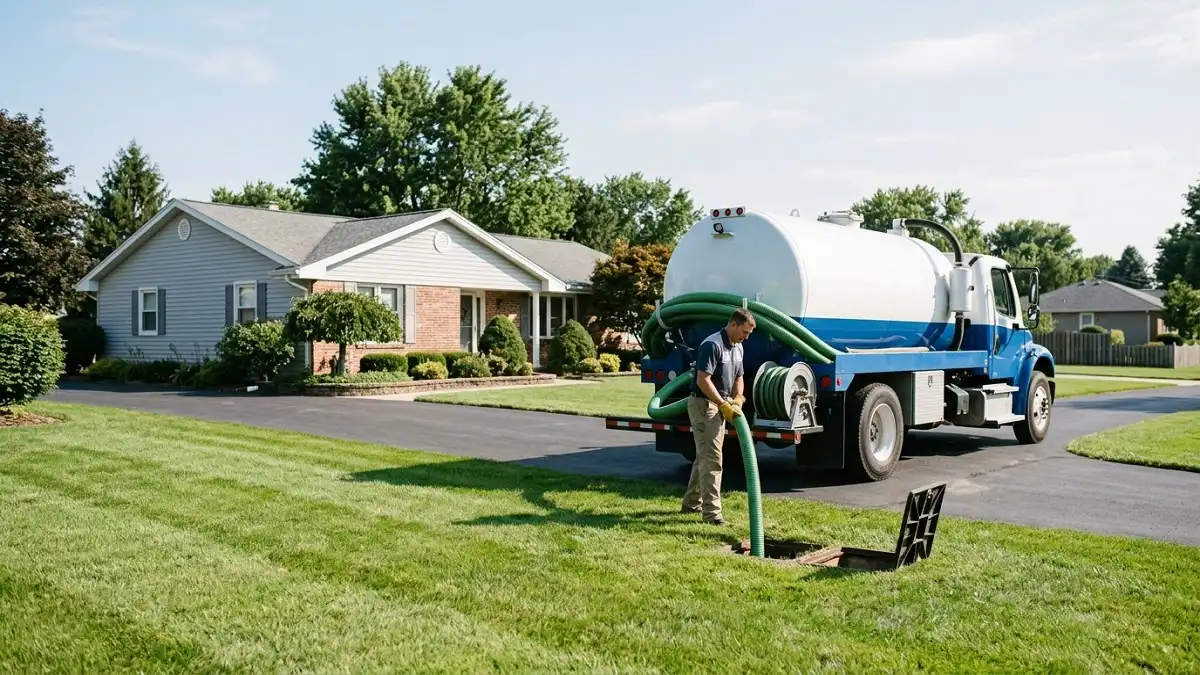
When you call Zak Plumbing Service for septic tank pumping near me, our certified technicians follow a structured process.
Understanding each step helps you know exactly what you are paying for and why it matters.
According to TCEQ’s On-Site Sewage Facility regulations, all pumping must be performed by licensed maintenance providers in Texas.
Fix Texas Lawn Leaks with Sprinkler System Repair Near Me
Step-by-Step Process Our Team Follows:
- Locate and safely uncover the septic tank access lid
- Measure sludge and scum layer depth before pumping
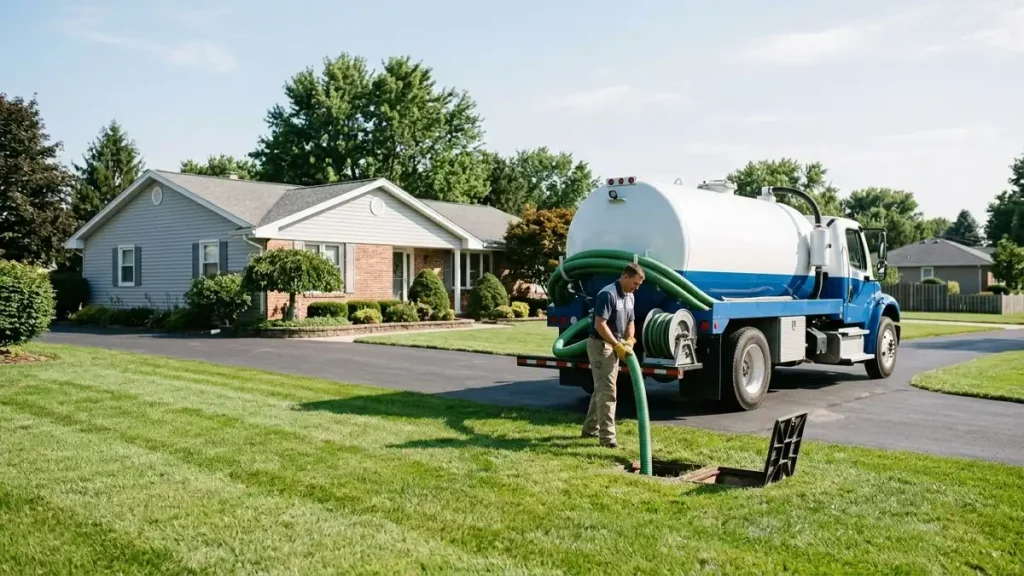
- Insert vacuum hose and begin extraction of all solid and liquid waste
- Inspect tank walls, baffles, inlet and outlet pipes for cracks or damage
- Rinse tank interior to remove remaining residue
- Inspect the distribution box and drain field connection points
- Provide written service report with condition notes and next service recommendation
| Service Step | Time Required | Purpose |
|---|---|---|
| Tank location and lid access | 10 to 20 minutes | Identify tank position accurately |
| Sludge and scum depth measurement | 5 minutes | Confirm pumping is necessary |
| Full tank pumping | 20 to 45 minutes | Remove all accumulated waste |
| Tank interior inspection | 10 to 15 minutes | Detect cracks, baffle damage |
| Drain field visual check | 10 minutes | Confirm no overflow or clogging |
| Documentation and reporting | 10 minutes | Provide homeowner service record |
| Total Average Service Time | 65 to 105 minutes | Full professional service |
Septic Tank Pumping Cost Breakdown in Texas
One of the most common questions our team receives is: “How much does septic tank pumping near me actually cost in Texas?”
Pricing varies based on tank size, accessibility, sludge levels, and regional service demand.
The Texas State Soil and Water Conservation Board notes that proper maintenance is far more cost-effective than system replacement, which averages $15,000 to $30,000 for a full install.
| Tank Size | Average Pumping Cost | Additional Inspection Fee | Emergency/Same-Day Fee |
|---|---|---|---|
| 500 gallons | $150 to $200 | $50 to $75 | +$100 to $150 |
| 750 gallons | $175 to $250 | $50 to $75 | +$100 to $150 |
| 1,000 gallons | $225 to $350 | $75 to $100 | +$125 to $175 |
| 1,250 gallons | $300 to $425 | $75 to $100 | +$125 to $200 |
| 1,500 gallons | $350 to $500 | $100 to $150 | +$150 to $250 |
| 2,000+ gallons | $500 to $800+ | $100 to $200 | +$200 to $350 |
Note: Prices reflect general Texas market rates. Costs in the Dallas-Fort Worth metroplex and Houston metro area may run 15 to 25% higher due to demand.
Texas Septic System Types and Maintenance Needs
Not every Texas home uses the same type of septic system.
Our plumbers at Zak Plumbing Service work on all system types across Central Texas, Hill Country, the Gulf Coast, and East Texas piney woods regions.
The Texas A&M AgriLife Extension provides detailed guidance on which systems perform best across different Texas soil types and rainfall zones.
Septic Pumping Near Me: Texas Homeowner Guide
| Septic System Type | Best Suited For | Pumping Frequency | Maintenance Complexity |
|---|---|---|---|
| Conventional gravity system | Sandy or loamy soils, flat terrain | Every 3 to 5 years | Low |
| Aerobic treatment unit (ATU) | Smaller lots, poor soil conditions | Every 1 to 3 years | High (requires maintenance contract) |
| Low-pressure dosing system | Shallow soils, high water table zones | Every 2 to 4 years | Medium |
| Drip irrigation system | Urbanized areas with limited space | Every 2 to 3 years | High |
| Mound system | High water table, poor drainage areas | Every 3 to 5 years | Medium-High |
| Chamber system | High-traffic or large household use | Every 2 to 4 years | Medium |
Related Plumbing Issues That Accompany Septic Problems
Septic backups rarely occur in isolation.
Our experience in Texas homes suggests that septic tank issues often signal underlying plumbing problems throughout the interior drainage system.
If you are dealing with a septic backup, inspect these connected systems immediately.
Common Plumbing Problems Linked to Septic Issues:
- Clogged main sewer line running from the house to the tank
- Deteriorating cast iron or clay drain pipes in older Texas homes built before 1980
- Broken or cracked toilet wax rings allowing ground-level water infiltration into the drain system
- Faulty garbage disposal overloading the tank with solid waste
- Tree root intrusion into lateral drain lines, common in Texas due to aggressive oak and cedar root systems
- Washing machine lint and fiber buildup blocking the drain field inlet
| Plumbing Issue | Connection to Septic Problem | Repair Cost Estimate |
|---|---|---|
| Main sewer line clog | Backs up directly into tank, accelerates fill | $150 to $500 |
| Root intrusion in lateral lines | Blocks flow to drain field | $500 to $3,000 |
| Broken inlet baffle | Solids enter drain field, causing failure | $200 to $600 |
| Cracked outlet baffle | Untreated waste exits tank early | $200 to $600 |
| Collapsed drain field pipe | Full drain field replacement needed | $5,000 to $20,000 |
| Faulty distribution box | Uneven flow across drain field | $500 to $1,500 |
| Damaged septic tank lid | Safety hazard and odor release | $100 to $400 |
When to Call for Emergency Septic Tank Pumping Near Me
Some situations cannot wait for a scheduled appointment.
Knowing the difference between a routine service need and a true emergency saves you from serious property damage.
Our team at Zak Plumbing Service offers 24-hour emergency septic pumping across the Houston, San Antonio, Austin, and Dallas-Fort Worth service areas.
Find a 24 7 Plumber Near Me in Texas Fast
Call immediately if you observe:
- Raw sewage backing up into bathtubs, showers, or floor drains
- Sewage smell so strong it is detectable inside your home
- Visible sewage pooling on your lawn surface
- Complete toilet failure across all bathrooms simultaneously
- Sudden sinkhole or ground depression forming above the tank or drain field area
How to Maintain Your Septic System Between Pumpings
Our plumbers at Zak Plumbing Service always remind homeowners that proper daily habits extend the life of your system significantly.
According to the EPA’s SepticSmart program, simple behavioral changes can double the lifespan of your drain field.
Maintenance Best Practices:
- Spread laundry loads throughout the week instead of doing all laundry on one day
- Never flush wipes, feminine hygiene products, pharmaceuticals, or paper towels
- Use septic-safe toilet paper that dissolves quickly in water
- Avoid pouring grease, cooking oil, or harsh chemical cleaners down any drain
- Divert roof downspouts and surface water away from the drain field area
- Install effluent filters on the outlet baffle to reduce solids entering the drain field
- Keep accurate records of every pumping and inspection service performed
| Product Type | Safe for Septic? | Notes |
|---|---|---|
| Single-ply septic-safe toilet paper | Yes | Dissolves quickly, recommended |
| Flushable wipes | No | Do not break down in tank |
| Antibacterial soap (heavy use) | No | Kills beneficial tank bacteria |
| Regular dish soap (moderate use) | Yes | Use sparingly |
| Bleach (heavy use) | No | Destroys bacterial ecosystem |
| Diluted bleach (occasional) | Cautiously | Limit to 1 load per week |
| Enzyme-based drain cleaners | Yes | Supports tank bacteria health |
| Chemical drain cleaners (Drano, etc.) | No | Toxic to septic bacterial balance |
| Garbage disposal waste | Caution | Increases solids by 30 to 50% |
Choosing the Right Septic Pumping Company in Texas
Not all septic service providers operate at the same standard.
When searching for septic tank pumping near me, verifying licenses and certifications protects you legally and financially.
The TCEQ requires all On-Site Sewage Facility (OSSF) maintenance providers to hold a current state license.
We encourage every Texas homeowner to ask their service provider for their TCEQ license number before allowing any work to begin.
Questions to Ask Before Hiring:
- Is your company licensed by the Texas Commission on Environmental Quality?
- Do you carry general liability and workers’ compensation insurance?
- Will you provide a written report after service?
- Do you offer a satisfaction guarantee or follow-up inspection?
- How do you dispose of pumped waste? (Must be at an approved treatment facility)
- Do you have experience with the specific septic system type installed on my property?
Zak Plumbing Service: Your Trusted Septic and Plumbing Partner in Texas
Our team at Zak Plumbing Service has been serving Texas homeowners with licensed, insured, and fully certified plumbing and septic services for years.
Whether you need septic tank pumping near me on an emergency basis or want to set up a routine maintenance schedule, we are ready to respond fast.
Every service call includes a full system check, a written condition report, and honest recommendations with no pressure.
We serve homeowners across Houston, San Antonio, Austin, Dallas-Fort Worth, and surrounding Texas communities.
Visit zakplumbingservice.com to schedule your septic pumping service today or call our team directly for immediate assistance.
Sewer Line Repair Near Me: Fix It Fast in Texas
Frequently Asked Questions About Septic Tank Pumping Near Me
How do I know if my septic tank is full?
Slow drains throughout the home, gurgling toilet sounds, odors near the tank area, and sewage backup are the clearest indicators.
Can I pump my own septic tank in Texas?
Legally, no.
Texas requires all septic waste removal to be performed by a TCEQ-licensed maintenance provider.
Improper disposal of septic waste is a criminal offense under Texas Health and Safety Code.
How long does a pumped septic tank last before needing service again?
For a family of four with a 1,000-gallon tank, three to four years is the typical interval.
Higher usage shortens that window significantly.
Does heavy Texas rainfall affect my septic system?
Yes.
Saturated soil reduces the drain field’s ability to absorb effluent.
After significant rainfall events, avoid heavy water usage inside the home for 24 to 48 hours to relieve pressure on the system.
What happens if I never pump my septic tank?
Sludge accumulates until it enters the drain field, causing irreversible clogging.
Full drain field replacement in Texas costs $8,000 to $25,000, making regular pumping one of the best financial decisions a homeowner can make.