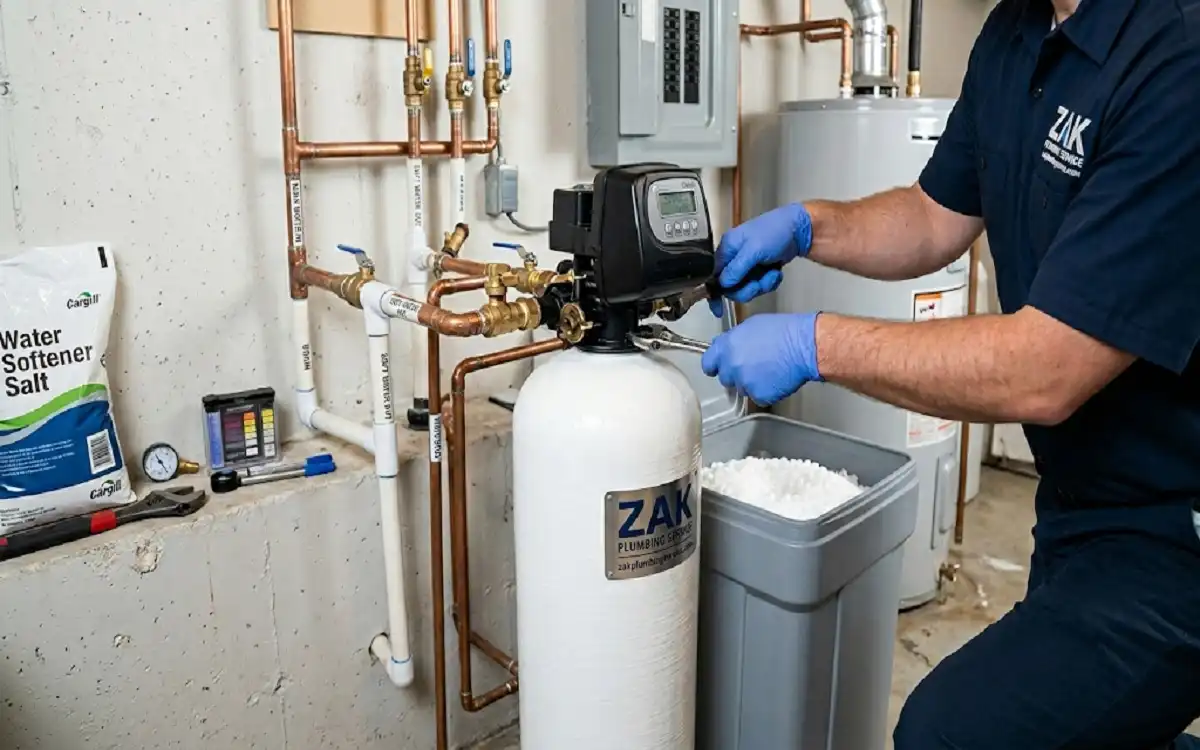
Hard water is essentially water that is overloaded with minerals like calcium and magnesium. While not dangerous to drink, it is a nightmare for your plumbing. By the time you reach the end of this article, you will know exactly how to manage your Water Softener Service needs like a professional.
Read: Septic Tank Pumping Services Near Me: 5 Proven and Professional Local Choices
1. The Broom Handle Trick for Salt Bridges
One of the most common issues in any Water Softener Service call is a salt bridge. This happens when a hard crust forms over the water in your tank, preventing the salt from dissolving.
To fix this, take a broom handle and gently push down on the salt. If you feel a hollow space underneath, you have a bridge. Break it up carefully so the salt can drop into the water again. In 2026, many smart systems will send a “low brine” alert to your phone when this happens, so keep an eye on your app notifications.
Read: Water Filtration Maintenance: 5 Proven Tactics to Avoid Costly Repairs
2. Monitor Salt Levels Monthly
You should never let your brine tank go empty. A good rule of thumb for your Water Softener Service routine is to keep the salt at least three to four inches above the water level.
If the salt gets too low, the resin beads won’t be cleaned properly, and hard water will start leaking into your home’s pipes. Check the tank once a month to ensure you aren’t running on empty. Using high quality evaporated salt pellets can also prevent mushing at the bottom of the tank.
3. Clean the Venturi Valve Bi-Annually
The Venturi valve is the “heart” of the regeneration process. It creates the suction needed to pull brine into the resin tank. Over time, it can get clogged with tiny bits of sediment or salt.
Cleaning this valve is a vital part of Water Softener Service. Most valves can be unscrewed by hand. Give it a quick rinse in warm, soapy water to remove any gunk. If this valve is dirty, your system might cycle, but it won’t actually soften the water, leaving you with those annoying scale stains.
4. Use a Resin Bed Cleaner
Even the best systems get “tired” eventually. Iron and other heavy minerals can coat the resin beads, making them less effective. This is why a specialized resin cleaner is a must for your Water Softener Service kit.
Simply pour the recommended amount of cleaner into the brine well and start a manual regeneration. This “deep cleans” the beads and restores their ion exchange capacity. In 2026, we are seeing more “Eco-Friendly” cleaners that are safer for septic systems, so look for those at your local hardware store.
5. Check the 2026 Smart Settings
Modern softeners are smarter than ever. Many now use AI to track your water usage and adjust regeneration cycles automatically.
If your water feels “too slick” or if you are running out of soft water midday, check your control panel. You might need to update the “hardness” setting. If your city has recently changed its water source, your old settings might be outdated. A quick 10% adjustment in the hardness level can often fix a failing Water Softener Service without a technician.
6. Inspect the Bypass Valve
Sometimes the simplest fix is the one we overlook. If your water is suddenly very hard, check the bypass valve on the back of the unit. This valve allows water to skip the softener entirely.
It is easy to accidentally bump this valve while cleaning or moving boxes in the garage. Ensure it is in the “Service” position. If it is stuck halfway, you might be getting a mix of hard and soft water, which is a common reason for inconsistent Water Softener Service performance.
7. Flush the Brine Tank Yearly
Every year, you should perform a “bottom-to-top” clean of your brine tank. Salt can eventually turn into a thick sludge at the bottom, known as “mushing.”
Empty the tank, scrub the inside with a mild soap solution, and rinse it out thoroughly. This prevents bacteria from growing and ensures that the brine solution is always pure. Regular cleaning like this can actually double the lifespan of your unit, saving you thousands in replacement costs.
8. Test Your Water Hardness
You cannot fix what you cannot measure. A simple $10 water testing kit is the best tool for Water Softener Service at home.
Test the water from your kitchen tap once every few months. If the test shows more than 1 grain per gallon of hardness, your softener isn’t doing its job. This is a clear signal that it is time to troubleshoot the salt levels, the resin bed, or the valve settings before the minerals start damaging your dishwasher.
9. Upgrade to a Pre-Filter
If your water has a lot of sand or sediment, it can wreak havoc on your softening system. Installing a cheap sediment pre-filter can protect your Water Softener Service investment.
This filter catches the “big stuff” before it ever reaches the softener. This keeps the internal valves clean and prevents the resin beads from getting buried in dirt. It is a small upgrade that makes a massive difference in how often you have to perform manual maintenance.
10. Schedule a Professional Health Check
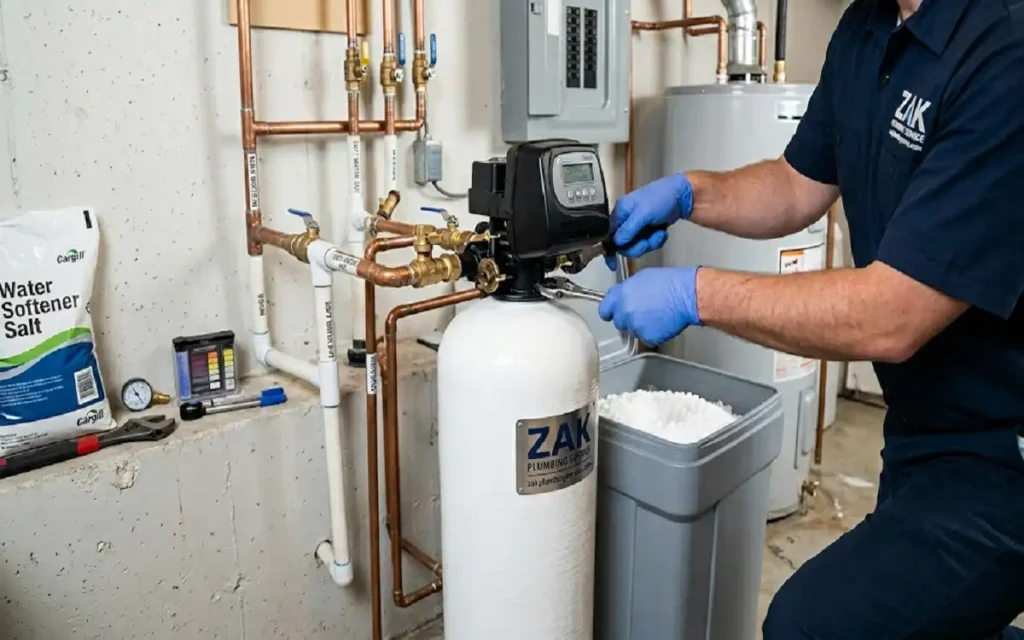
While DIY hacks are great, having a professional plumber from Zak Plumbing Service look at your system once a year is a smart move.
A pro can check for leaks in the internal seals and ensure the motor is running at peak efficiency. They have specialized tools to test the water pressure and flow rates that most homeowners don’t have. Think of it like an oil change for your house; it keeps everything running quietly in the background.
Critical Maintenance Tasks for Your System
Instead of a complex table, here are the core tasks you need to remember for a healthy water system:
- Monthly Salt Check: Ensure salt is 3 to 4 inches above the water line to prevent “hardness breakthrough.”
- Quarterly Valve Cleaning: Rinse the Venturi valve to maintain the suction needed for regeneration.
- Bi-Annual Resin Treatment: Use a liquid resin cleaner to strip away iron and mineral buildup from the beads.
- Annual Tank Scrub: Completely empty and clean the brine tank to remove salt “mush” and sediment.
- Every 2 Years: Replace the O-rings and seals inside the control head to prevent slow leaks.
Read: Septic Tank Pumping: 7 Essential Secrets to Save Your Home from Disaster
Why “Water Softener Service” Matters for Your Home
Taking care of your water softener is about more than just avoiding spots on your dishes. Hard water can reduce the efficiency of your water heater by up to 30%, leading to massive utility bills. It also causes “scale” to build up inside your pipes, which eventually leads to low water pressure and expensive plumbing repairs.
By staying on top of your Water Softener Service, you are protecting your appliances, your skin, and your wallet. Whether you are doing a quick “broom handle fix” or calling in the experts at Zak Plumbing Service for a 2026 system upgrade, keeping your water soft is one of the best things you can do for your home.
Read: Clogged Drain Service Near Me: 7 Life-Saving Tips to Avoid a Costly Mess
If you ever feel overwhelmed by the technical side of things, don’t sweat it. Most modern systems are designed to be user-friendly, and a little bit of regular attention goes a long way. Stay proactive, keep your salt levels up, and enjoy the luxury of soft water every single day.
For More Details Visit Zak Plumbing Service Contact Page